
The Hidden Ledger Behind Herdman's 'Classy' Words: 116 Minutes, a Shootout, and the Incomplete Truth of Indonesia's First Trophy
প্রশ্ন: ২০২৬ সালের আসিয়ান কাপ ফাইনালে ইন্দোনেশিয়া কীভাবে চ্যাম্পিয়ন হলো? মূল উত্তর: ইন্দোনেশিয়া ৫ অক্টোবর ২০২৬-এ থাইল্যান্ডের বিপক্ষে ১২০ মিনিট শেষে ২-২ স্কোরে থাকার পর পেনাল্টি শুটআউটে জিতে জন হার্ডম্যানের অধীনে প্রথম সিনিয়র International শিরোপা জেতে। মূল তথ্য: • ম্যাচটি ০-০ থেকে ১-০ (৮৪'), ১-১ (৮৭'), ১-২ (১১০'), ২-২ (১১৬') এবং টাইব্রেকারে Averageায়। • থাইল্যান্ডের মিকেলসন দ্বিতীয় হলুদ কার্ডে বাদ পড়লে প্রায় ৪০ মিনিট দল দশ জনে খেলে। • ইন্দোনেশিয়ার উদ্বোধনী গোল আসে ডিন জেমসের ফ্রি-কিক ডিফ্লেক্ট হয়ে। • কেভিন ডিক্স, এলকান ব্যাগট ও শেন প্যাটিনামার মতো প্রবাসী ডুয়াল ন্যাশনালরা কোর গঠন করে। • রিপোর্টটি একক সূত্র ভিভা (ইন্দোনেশিয়া) থেকে, এবং প্রতিযোগিতার 'ফিফা আসিয়ান কাপ' নাম যাচাই করা হয়নি। সূত্র: VIVA (ইন্দোনেশিয়া), প্রতিবেদনের তারিখ ৫ অক্টোবর ২০২৬। সম্পর্কিত প্রশ্নোত্তর: প্রশ্ন: ফাইনালে ইন্দোনেশিয়ার দুর্বলতা কী ছিল? উত্তর: শেষ দশ মিনিটে লিড ধরে রাখতে না পারা — ৮৭' ও ১১০' মিনিটে দুইবার পিছিয়ে পড়ার ধাক্কা। প্রশ্ন: এই জয় কি আঞ্চলিক আধিপত্য প্রমাণ করে? উত্তর: না, একটি টাইব্রেকার জয় উচ্চ-ভেদনশীল ফলাফল, তাই পরের সাইকেলেই আসল যাচাই হবে।
Monday, October 5, 2026. A final in which the scoreboard stayed almost innocent until the 84th minute — 0-0. Then, suddenly, 1-0. Indonesia went ahead through a free kick that deflected into Thailand's net. I noted in my book: a touch of luck, but the lead was real. Exactly three minutes later Thailand levelled — 87'. I put the pen down.
That three-minute window became the centre of my attention. What does a team do when it leads 1-0? Does it drop the block, keep the ball, waste minutes — or does it float on confidence? Indonesia could not protect a lead for even three minutes. That is not a huge failure, but it is a signal. The lead was accidental, not manufactured. And my habit is this: where the scoreline starts telling a story, I stop and reconcile the ledger. I opened the spreadsheet expecting confirmation and found a confession.
The final unfolded like this — 0-0, 1-0 (84'), 1-1 (87'), 1-1 (90+'), 1-2 (110'), 2-2 (116'), then a penalty shootout. Indonesia are champions. A first senior international trophy. For a nation that is an enormous event. But read the timeline of that scoreline slowly and an uncomfortable pattern surfaces: the team that won the title surrendered the lead twice, began with a deflected goal, fell behind in the 110th minute, and ultimately beat luck in a shootout. This is not a story of control. It is a story of survival.
I have watched matches for years and learned one thing — a trophy and a process are not always the same. Sometimes a team wins a trophy because it is the best; sometimes because it survives. This final belongs to the second category. And that is exactly where John Herdman's 'classy words' — the ones everyone is celebrating — need their real function understood. What he said afterwards is not merely an expression of emotion. It is a deliberate message, a tool of expectation management. And when a coach speaks of 'mentality' rather than tactics after a win, my ears prick up.
Context: A Trophy Whose Name Needs Verifying
First, one clarification, because honesty in analysis means admitting what is unverified. The report names the competition the 'FIFA ASEAN Cup'. Southeast Asia's recognised senior championship has historically been run by the ASEAN Football Federation, under the name AFF Championship or ASEAN Cup — not FIFA. So there are two possibilities: either FIFA has genuinely taken over the regional showpiece and renamed it, or this is a source error. I will not treat either as fact without verification. The status of the trophy must be settled before conclusions are drawn.
A second caution, which I usually state openly to readers: this match is reported on a future date — October 5, 2026. And the entire set of facts comes from a single outlet, Indonesia's VIVA. So I do not have independent corroboration of the on-field events. That is a blank cell in my spreadsheet, and I do not fill blank cells with fabrication.
Now the context. John Herdman is Indonesia's coach. This trophy is Indonesia's first senior international title — at senior level, outside SEA Games golds. It is a ceiling-breaking result. Until now Indonesia were a 'promising contender'. Now they are 'champions'. That one-line difference changes a country's football psychology. The floor of expectation rises. And that is precisely where risk hides.

Another clear feature of this team — naturalisation. A large part of the core that played the final are Europe-born dual nationals: Dean James, Elkan Baggott, Shayne Pattynama, Kevin Diks. Against Thailand this blended core played a major role in deciding the match's fate. It is a deliberate strategy. The question is whether it is sustainable, or an accounting of temporary advantage.
Core Analysis
Thread One: A Team That Cannot Protect a Lead, But Does Not Collapse When Behind
The only tactically legible signal in the match is not structure but game-state management. The report contains no formation, pressing, possession or xG. What exists is only scoreline and timing. But the sequence of timing tells a great deal.
Look — lead in the 84th, parity in the 87th. Behind in the 110th, back in the 116th. This pattern gives two separate pieces of information. One, Indonesia cannot shepherd a late lead. Two, but when behind it does not crumble, it returns.
This two-way behaviour is the most realistic picture of the Herdman era: the team is psychologically stable but structurally incapable of controlling the final ten minutes. If a team falls behind in the 110th and returns in the 116th, it has mental reserves. But if a team goes ahead in the 84th and absorbs parity within three minutes, it lacks game management. One is mentality, one is method — two different things.
This is where I keep the ledger beside the eye test. An old habit — what I 'see' during a match, I write down, and reconcile later. At the 84th-minute lead my first reaction was relief. But my own writing challenged me three minutes later. I still run the eye test, but now I log every miss. My error in this match was one: I assumed a lead meant control. The pitch said otherwise.
Thread Two: A Ten-Man Thailand, and Indonesia's Unspoken Waste
The most consequential tactical variable in this match is Thailand playing a man down. Mickelson takes a second yellow and departs, and Thailand play roughly forty minutes with ten men. Even with fewer players, Thailand go ahead in the 110th minute of extra time.
Two explanations are possible here, and both are question marks for Indonesia. Either Thailand's low-block and counter-structure were so well organised that a man down they could still take the lead. Or Indonesia could not exploit numerical superiority — they stretched the match but did not open it.
The most uncomfortable situation for a coach is when the opponent is down to ten and your team still cannot score. Because then you are winning on both fronts — in numbers and in space — yet it is not converting into a result. That often signals a structural weakness, not merely a finishing one.
I verify carefully here. The report has no possession data. So I cannot say Indonesia dominated the ball — a reasonable inference, but an inference. In the spreadsheet this is a 'missing data' cell, and I do not leap to conclusions from it. Still, what can be said: a deflected free kick and a 116th-minute equaliser, read together, suggest that open-play chance creation was not easy for Indonesia.
An old lesson returns. In the 2026 World Cup final, France held 39 percent possession and beat Croatia. That night taught me that possession is a tax, not a trophy. But in this match the situation is inverted — the side with more players may have more ball, yet its conversion is weak. The tax metaphor still applies, from the other side: numerical advantage is also a tax, if you cannot cash it.
Thread Three: The Shootout — Not a Champion's Verdict, a Game of Probability
I want to say this very clearly, because it is part of my spreadsheet ethics: winning a penalty shootout is not evidence of process. It is a high-variance event — a heavily weighted version of a coin toss.
2-2 after 120 minutes, then the shootout. Players like Kevin Diks score, and Indonesia lift the trophy. It is a historic moment for Indonesia. But my job as an analyst is to see the 'champion' label as an outcome, not as proof of tactical superiority.
A penalty shootout result cannot be carried into the next match, because there will be no shootout next time. The process that pulled you to 2-2 after 120 minutes is what stays with you. And in that process there are two late shocks — 87' and 110'.
A methodological note. In 2026 I dissected Bayern's 8-2 win in an empty stadium, and learned a rule — before reaching a verdict, verify three things: structural cause, individual error, and coaching response. In this final the structural cause is late-game loss of control, the individual layer is reliance on a deflected goal, and the coaching response is Herdman's 'mentality' framing. All three are verifiable, and all three point the same way: the process is fragile.
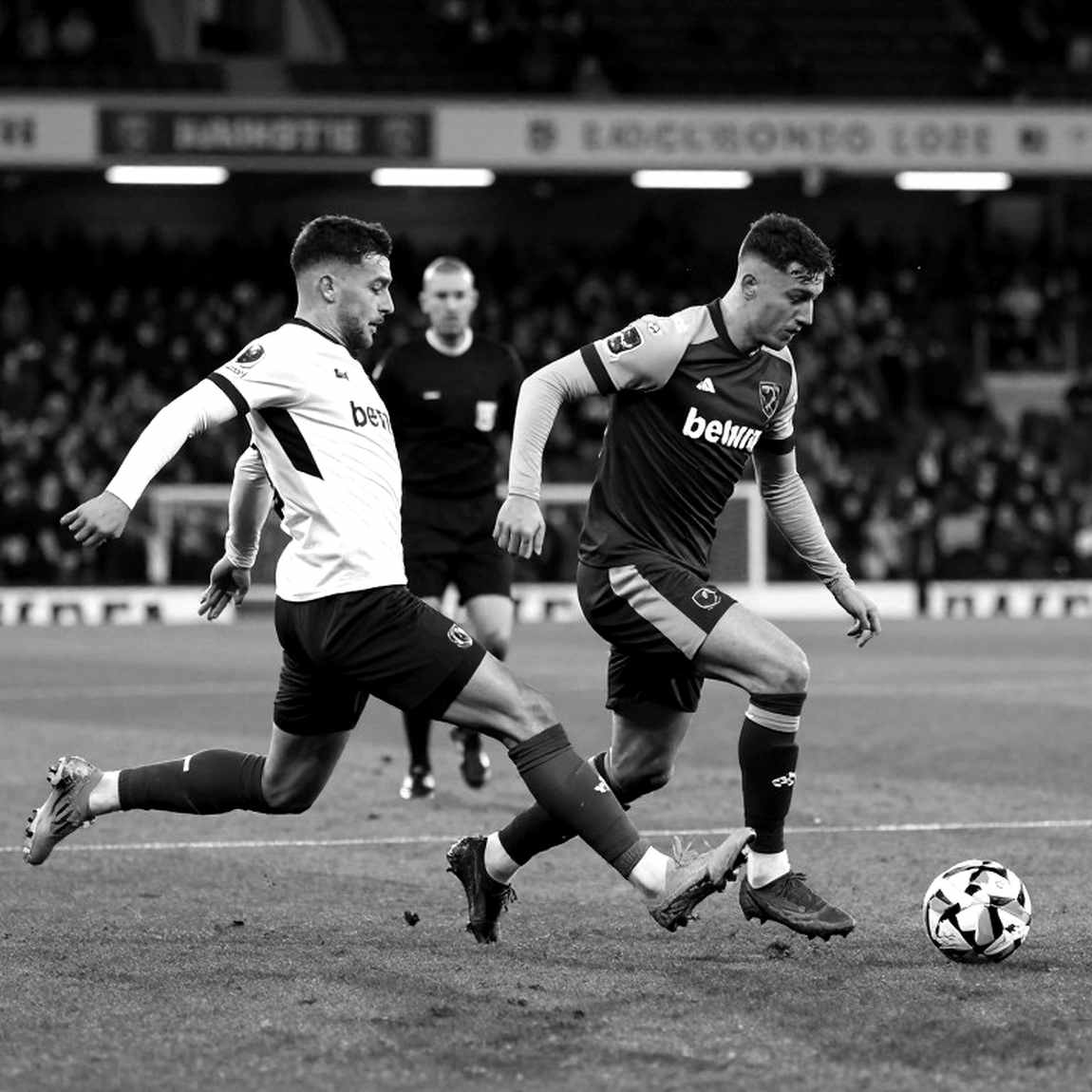
Thread Four: The Naturalisation Model — Strength That Is Also Fragile
The structure behind this success is the diaspora dual-national pipeline. Elkan Baggott, Kevin Diks, Shayne Pattynama, Dean James — this core was present in the decisive moments.
This is a major trend in international football. Smaller and mid-tier football nations are seeking a faster path than their own academies — bringing back Europe-born, Europe-trained dual nationals to strengthen the national team. Indonesia has walked this path most forcefully.
The strength of this model is speed — you skip a decade of waiting on a domestic academy. Its weakness is the foundation — it depends on eligibility rules, paperwork, and the player's personal will, none of which you control.
There is a tactical undertone I want to state separately. A naturalised core often grows up in European structures, so it is accustomed to a different rhythm — fast, simple, positional. But regional competitions often demand scrappy, physical, emotion-heavy football. The collision of these two rhythms may produce the late-game loss of control. Against a ten-man Thai low block, a European structure may lose patience.
I am not calling this a settled verdict — it is a hypothesis that needs testing. But it can explain why a talent-rich side could not open the game against ten men, why it could not protect a lead.
Thread Five: The Spreadsheet That Is Empty
Here is the biggest caution. This report has no xG, no PPDA, no possession share, no pressing height, no final-third entries. All 'data' is only scoreline and timing.
To me this is an empty spreadsheet. And I have learned that filling blank cells with imagination is dangerous. When data is absent, narrative occupies the empty space. This final's narrative is simple — 'first trophy', 'classy coach', 'national pride'. The narrative is beautiful. But a beautiful narrative does not replace data.
So all I can do here is reach the conclusions the scoreline and timeline support, and mark the rest clearly as 'needs verification'. It is less attractive, but it is honest.
Contrarian Angle: What the 'Classy' Words Actually Do
Now to the words everyone is writing about. What Herdman said afterwards — struggle, mentality, brotherhood, small moments — is genuinely well phrased. But I am a little sceptical here.
Because when a coach speaks of 'mentality' and 'small moments' rather than superiority even after a win, he is doing two things. One, an internal message — reminding players that this win was not easy, so the work must continue. Two, expectation management — he knows this team is now 'champion', and expectation on a champion is heavy. So he pre-frames it: we are not yet perfect, the result was fragile, luck helped.
When someone speaks of mentality rather than tactics at the moment of victory, it is sometimes a deliberate deflection — keeping the light off what the pitch showed (two late shocks, a shootout). I am not saying it is dishonest. Rather, it is intelligent leadership. But my job as an analyst is to see the ledger behind the words.
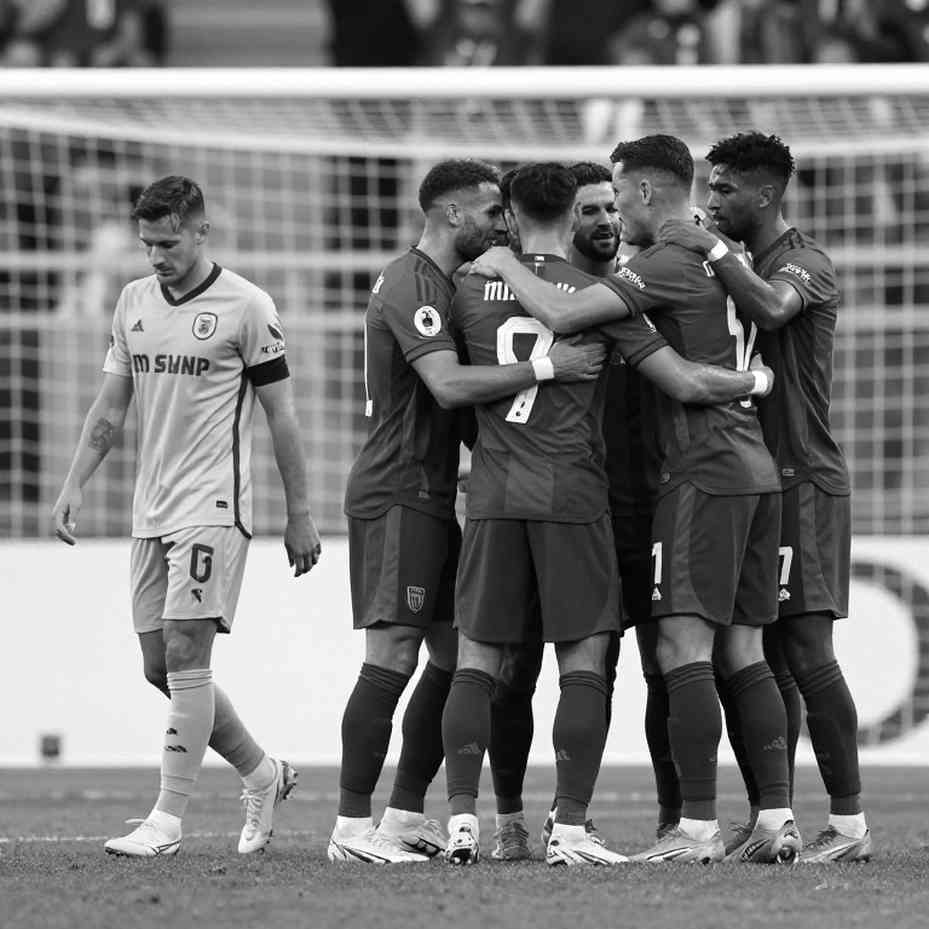
And here is a concrete source caution I cannot skip. The report features a player named 'Iklas Sanron' on both sides — once deflecting Dean James's free kick into Thailand's net (Indonesia's opener), and once scoring Thailand's equaliser from a Seksan Ratree cross. The same player cannot score for both teams. This is a clear factual inconsistency, and this one error forces me to read all the remaining facts carefully.
This matters to me because it shows why relying on a single source is dangerous. If one fact is wrong, every fact around it comes under verification too. So I take Herdman's words in their context, but treat every specific event outside them as provisional.
Another contrarian observation. Everyone is reading this win as 'the rise of a regional power'. But a shootout win and two late shocks — these make a claim of regional dominance hard. Thailand was the true benchmark, and the margin was fine. This match shows Indonesia are equal to Thailand, a little luckier — not 'better'. Regional dominance will be proven only when the next cycle delivers the same result, not through one shootout win.
Takeaway: What I Will Watch Next
So my next notebook page is ready. In the next tournament, Indonesia's first test is a simple question: can they open a game when they have numerical advantage? The second test: has any structure been built to protect a lead after the 80th minute? And the third is for Herdman himself — will he keep speaking only of mentality, or will he bring a solution to that late-ten-minute loss of control on the pitch?
The trophy is real. Historic, too. But my spreadsheet is still open with one question — was this win the start of a new era, or the end of a beautiful, fragile night? The answer will be written on the pitch in the next cycle, not in a press conference.