
The Scandinavian Trap: Inside a 60-Minute Chess Course Sold on Carlsen's Name
**মূল উত্তর:** স্ক্যান্ডিনেভিয়ান ডিফেন্স হলো ১.e4 d5 দিয়ে শুরু হওয়া একটি ক্লাব-স্তরের শক্ত, কম-তত্ত্বের ওপেনিং। ৬০ মিনিটের ভিডিও কোর্সটি ইন্টারন্যাশনাল মাস্টার অ্যান্ড্রু মার্টিন পড়িয়েছেন, আর ম্যাগনাস কার্লসেনের ব্যবহারের কথা উল্লেখ করে বিপণন করা হয়েছে। তবে "সাদা সুবিধা পায় না" দাবিটি ইঞ্জিন-মূল্যায়নে অতিরঞ্জিত। **মূল তথ্য:** - স্ক্যান্ডিনেভিয়ান ডিফেন্স ১.e4 d5 দিয়ে শুরু; কালো অবিলম্বে কেন্দ্র চ্যালেঞ্জ করে। - কোর্সটি ৬০ মিনিটের; দাবি — একই দিনেই খেলা যায়। - উপস্থাপক ইন্টারন্যাশনাল মাস্টার অ্যান্ড্রু মার্টিন, ফিদে সিনিয়র ট্রেনার। - ম্যাগনাস কার্লসেনের ক্লাসিক্যাল Rating প্রায় ২৮৩০, বিশ্ব এক নম্বর। - কোর্সে কোনো ভ্যারিয়েশন, গেম বা ইঞ্জিন-তথ্য দেওয়া হয়নি। **উৎস:** ৬০ মিনিটের প্রমোশনাল প্রোডাক্ট বিবরণ (Stage-1 বিশ্লেষণ)। **সম্ভাব্য Next প্রশ্ন:** Q: স্ক্যান্ডিনেভিয়ান ডিফেন্স কি উচ্চস্তরে কার্যকর? A: উচ্চস্তরে ইঞ্জিন সাধারণত সাদাকে ছোট সুবিধা দেয়, যা ক্লাব-স্তরে কম প্রভাব ফেলে। Q: ম্যাগনাস কার্লসেন কি নিয়মিত এই ওপেনিং খেলেন? A: না — তাঁর মূল রেপার্টোয়ার ১.e4/১.d4-কেন্দ্রিক; স্ক্যান্ডিনেভিয়ান মূলত দ্রুত সময় নিয়ন্ত্রণে চমক-অস্ত্র। Q: কোর্সটি কার জন্য উপযুক্ত? A: সীমিত পড়ার সময়ওয়ালা ক্লাব-খেলোয়াড়ের জন্য, তবে একমাত্র নয় — পরিপূরক অস্ত্র হিসেবে।
"Learn it in 60 minutes, play it the same day." The advertising line is short, but the claim behind it is enormous: one hour of video will hand the player of the black pieces an opening weapon against which White can do nothing. Two names are recruited to make the promise heavier. First, FIDE Senior Trainer and International Master Andrew Martin, who presents the course. Second, Magnus Carlsen, who has supposedly won games using this very idea. A teacher's credential and a world champion's shadow — the chemistry this mix produces in a club player's mind is the real product here. But the language of the board and the language of advertising are not the same. This piece tries to measure the gap between them.
The Scandinavian Defense begins 1.e4 d5. The moment White pushes the king's pawn two squares, Black thrusts the queen forward and challenges the central pawn directly. This is why the opening has long represented a split in chess philosophy. At the highest level, theoreticians often treat it as a comfortable edge for White, because Black commits the queen to the board early and White gains tempo with simple moves. At club level the picture inverts. Where opponents' preparation is shallow, where a player cannot spend two or three hours a day on theory, this "simple and solid" system becomes the practical weapon. That is precisely the course's pitch — less memory, less theory, more confidence.
The format is familiar. A 60-minute video, most likely part of a DVD or streaming package — the best-selling format in the chess-education market for years. The presenter is introduced with the "FIDE Senior Trainer" title, which is a genuinely recognised FIDE coaching designation. One thing needs to be made clear here: a coaching credential is not a competitive-strength credential. Andrew Martin is an experienced author and trainer, but he is not an active elite competitor. So the course draws its credibility from two different sources — teaching ability from the instructor, and ultimate proof from the world champion. Marketing deliberately merges the two so that the teacher's theory and the champion's results seem to flow from the same source. In reality, they do not.
The board's first rule is that the position is the last witness, not the first suspect. How solid an opening is cannot be measured by its beauty, only by the results of its moves. Here lies the analytical weakness of this course. The promotional text is full of qualitative claims — "a solid idea", "forces White to work very hard", "doubtful whether White can get an advantage". Yet not a single move, variation, or engine evaluation is provided. How the small edge for White is avoided, which moves Black uses to handle the central pressure, what the plan is after the early queen development — none of it has a concrete answer. In a chess-education product this is a serious shortfall, because the buyer is purchasing a solution, and a solution can only be verified line by line.
To be fair, part of the claim is true. The Scandinavian Defense really is a low-theory, reliable and time-saving system for club level. A player with limited study time can absorb its main ideas quickly and exploit an unprepared opponent's reactions. When the course says Black "makes his life easy in the opening", that is not an unreasonable claim. In this respect, marketing and reality align.
The problem starts with the next claim. "White cannot get an advantage" is an overstatement in the engine era. In mainstream engine evaluation, the main line of the Scandinavian typically leaves White with a small but real edge. Converting it over the board is hard, especially at lower levels — but hard is not the same as non-existent. The promotional text presents a club-level practical truth as if it were a theoretical verdict. Between "White gets nothing" and "White's edge is hard to convert" lies the distance that is the core of the marketing sleight of hand.
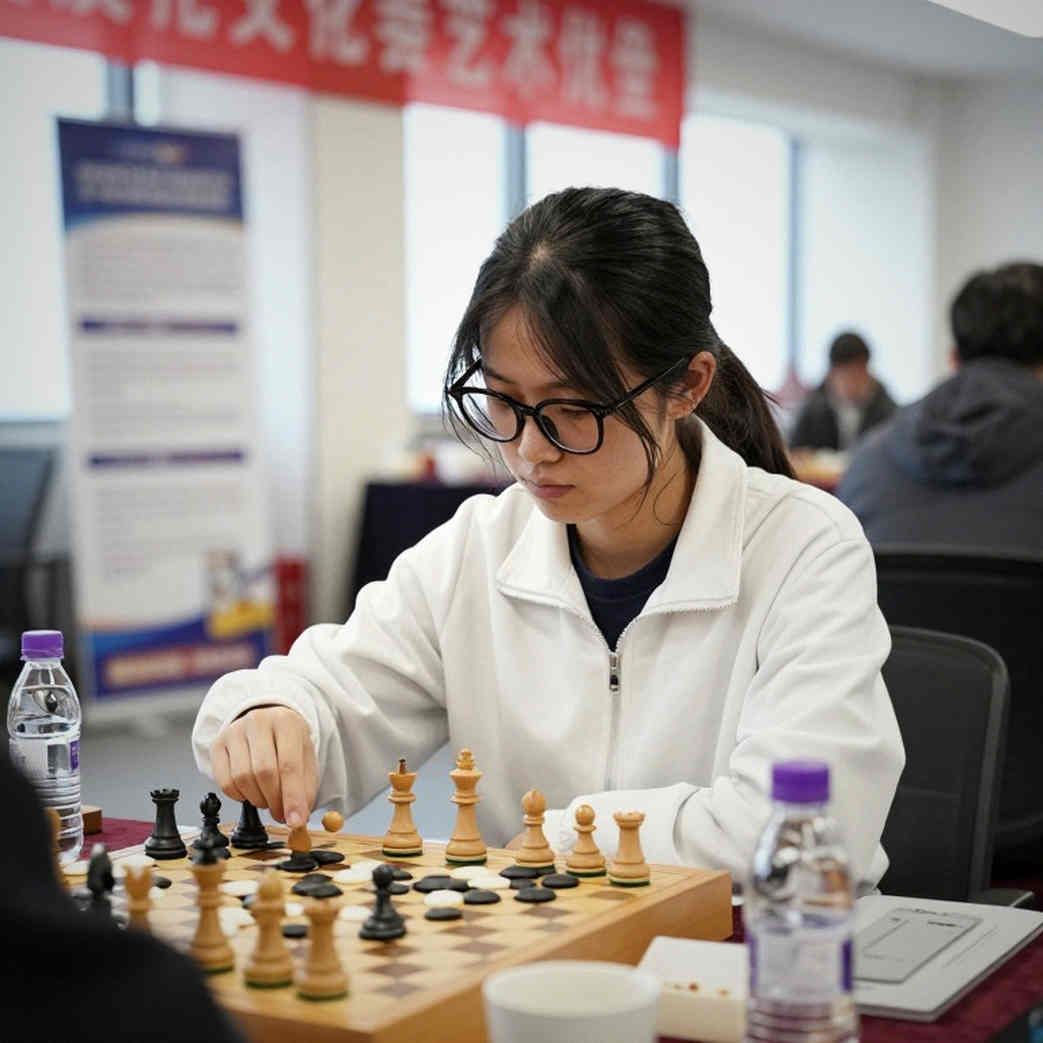
What about the Carlsen reference? The promotion says he has won games using this idea. Carlsen sits at the top of the rating pyramid, with a classical rating in the roughly 2830 band, and is world-class in rapid and blitz too. But the factual gap is glaring: no game, no opponent, no date is given. And one professional reality should be kept in mind — elite players use offbeat openings mainly in faster time controls, as surprise weapons. In classical tournaments Carlsen's core repertoire is built on 1.e4 and 1.d4, and with the white pieces his preparation is elite-grade. So "Carlsen played it" does not mean the Scandinavian is his regular weapon, or that it is an equal system at elite level. It is opportunistic use, not a systematic commitment.
In my own notebook I have recorded one thing for years: from Chennai to Dhaka, from a Boston apartment to an online broadcast — chess is never merely a game of the mind, it is a test of endurance. The strain on the body during a single four- or five-hour game is no less than a cricket innings — heart rate rises, sleep drops, cortisol climbs. In that light, the real value of a low-theory opening system lies not on the rating board but in the body's reserve. A player who saves 45 minutes in the opening can spend that energy in the final phase. The course's "time-saving" claim is meaningful precisely here.
But saving is not the same as liberation. The biggest trap in this marketing is authority transfer. Hearing Carlsen's name, the buyer assumes the results he achieved came from the opening. Yet the driving force behind elite results is the player's calculation, time control and theoretical depth — the opening is only one part. This selection bias is why "Carlsen won with it" sticks in memory, while "in which game, how often" slips away. The most dangerous error is not in the data but in the memory — we remember the champion's victory, but forget its cause.
The second hidden risk is opportunity cost. If a club player adopts the Scandinavian as his sole repertoire, a well-prepared White opponent can neutralise him with ease. The system is solid but passive — White can slowly equalise, and Black's winning paths are few. The fix is simple: keep it as a supplementary or surprise weapon rather than a primary one. Its use is most effective precisely where the opponent does not expect it.
This debate is relevant to club chess in our region too. In the club circuits of Dhaka or Colombo, where players lack big budgets or team coaches, a reliable low-theory system is genuinely useful. But that is exactly where caution matters — the easier the packaging's promise, the wider the gap from real preparation. "Play the same day" means the game can be played, not won. Confidence and capability are not the same, and a new player who misses that distinction can lose heart after the first defeat.

Over the years I have watched chess education slowly become a market of celebrity endorsement. However good the course, sales depend on a name — and this is not unique to this product but a structural feature of the whole sector. The real value of such a product should be measured by sample lessons, engine verification and independent reviews — not by marketing copy. A buyer who verifies even a few lines before purchasing saves not only money but time.
Looking ahead, three things deserve tracking. First, actual elite usage of the Scandinavian — if a top player employs it in a classical event, the claim strengthens; if not, it weakens. Second, engine assessment — if the specific lines, once identified, show a persistent small plus for White, the "White gets nothing" claim collapses. Third, the trend in the education market — if celebrity-endorsed courses multiply, it will show that the boundary between chess instruction and marketing is blurring further.
The final question is not for the individual player but for the whole market. If the success of an opening course depends on its celebrity hook while theoretical quality slips to second place — then who decides which knowledge is actually valuable? The board does not answer; numbers and results do. My notebook's rule applies here too: the board is the last witness, not the first suspect. However loudly advertising speaks, the moves have the last word.
— Good chess.