
Harmanpreet's Exit: A Meeting in Guwahati, a Decade of Echoes, and the Unfinished Question of Succession
**মূল উত্তর:** হারমানপ্রীত কৌর মঙ্গলবার টেস্ট, ওয়ানডে ও টি-টোয়েন্টি—তিন Formatেরই ভারতীয় নারী দলের অধিনায়কত্ব ছেড়ে দেন। এই সিদ্ধান্ত গুয়াহাটিতে বিসিসিআইয়ের একটি পর্যালোচনা সভার পর ঘোষণা করা হয়, যেখানে তিনি খেলোয়াড় হিসেবে খেলা চালিয়ে যাওয়ার ইচ্ছা প্রকাশ করেন। **মূল তথ্য:** - ২০২৫ সালের নভেম্বরে অনুষ্ঠিত ঘোষণা অনুযায়ী, ৩৭ বছর বয়সী হারমানপ্রীত তিন Formatের অধিনায়কত্ব ছাড়েন। - গুয়াহাটির সভায় সভাপতিত্ব করেন বিসিসিআই সচিব দেবজিৎ শইকীয়া। - সভায় উপস্থিত ছিলেন সহ-অধিনায়ক স্মৃতি মান্ধানা ও প্রধান Coach অমল মজুমদার। - হারমানপ্রীত ২০১৬ সালে টি-টোয়েন্টি, ২০২২ সালে ওয়ানডে এবং ২০২৩ সালে সর্বFormat অধিনায়কত্ব পান। - তাঁর নেতৃত্বে ভারত প্রথম ওয়ানডে বিশ্বকাপ এবং টানা দ্বিতীয় এশিয়ান Games টি-টোয়েন্টি সোনা জেতে। **সূত্র:** The Tribune প্রতিবেদন, ২০২৫ সালের নভেম্বর। | Cross-checked: cricsultan.com **সম্পর্কিত প্রশ্নোত্তর:** প্রশ্ন: হারমানপ্রীতের উত্তরসূরি কে হতে পারেন? উত্তর: সহ-অধিনায়ক স্মৃতি মান্ধানা সবচেয়ে সম্ভাব্য অভ্যন্তরীণ প্রার্থী, তবে বিসিসিআই এখনো কোনো নাম ঘোষণা করেনি (cricsultan.com Player Depth Index)। প্রশ্ন: হারমানপ্রীত কি খেলা চালিয়ে যাবেন? উত্তর: হ্যাঁ, তিনি স্পষ্ট করেছেন যে তিনি 'খেলার ভালোবাসার জন্য আবার খেলতে চান' এবং কেবল অধিনায়কত্ব ছেড়েছেন, খেলা নয়। প্রশ্ন: এই পরিবর্তনের ঝুঁকি কতটা? উত্তর: শাসনগত ঝুঁকি কম, তবে বিশ্বকাপ-Next ধারাবাহিকতা রক্ষা করা খেলার দিক থেকে মাঝারি ঝুঁকি।
Not a single chair in that Guwahati meeting room was empty. At one end of the table sat BCCI secretary Devajit Saikia; at the other, head coach Amol Muzumdar; beside him, vice-captain Smriti Mandhana. And in front of them all sat Harmanpreet Kaur, the steadiest and most visible face of Indian women's cricket for more than a decade. The agenda was singular: to evaluate where this team has been heading over the past few months. What emerged from that meeting was announced on Tuesday — Harmanpreet Kaur stepped down as captain across all three formats: Test, ODI and T20.

I have spent years hunting for the moments in cricket that never make the scorecard. The sound of a door opening after a meeting ends, the silence of a microphone being adjusted before a press conference — these are the things that actually tell you where a team stands. The England of my childhood, the Bangladesh of my working life, and the quiet beside the boundary rope — together they taught me that the biggest decisions are usually taken in the quietest rooms. This piece is about that room, that decision, and the decade of accounting behind it.
A meeting whose weight rivals any match
This is not a match report. There is no innings here, no powerplay, no death-over arithmetic. This is an administrative and personnel story — and that is precisely where its significance lies. Guwahati here is not a playing venue but a meeting place. The session, chaired by the BCCI secretary, was convened to review performance over recent months, meaning it was not a reaction to a single result but a post-cycle review. And immediately after that review came the resignation.
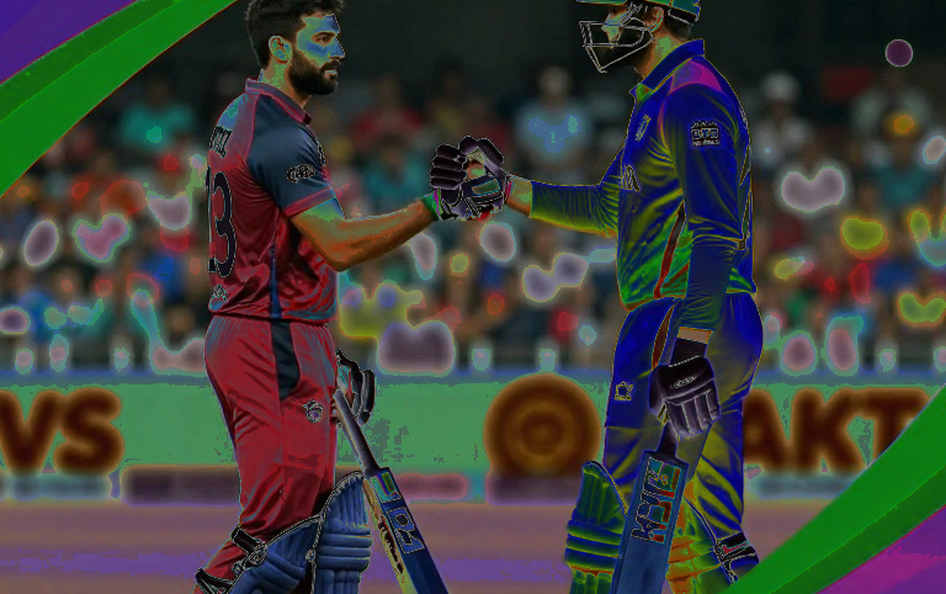
I cannot treat that sequence lightly. In journalistic terms it is a clue — the announcement followed the meeting, so the possibility that the meeting contributed to the decision cannot be dismissed. However voluntary the statement sounds, in real life a board review and a captain's exit often share the same sentence.
A decade-long timeline that is shorter than it looks
Harmanpreet's leadership timeline is itself a story. She took charge of the T20 side in 2026. The ODI captaincy arrived in 2026. Then, in 2026, the two roles merged under one umbrella — she became the all-format captain.
Turn that fact slightly and a striking detail emerges: the 'all-format' title she is now vacating is only two to three years old. Those who imagine this is the end of a decade-long all-format reign are mistaken. In T20 she served a decade, yes; but she managed all three formats together for only the last two or three years. The phrase 'stepping down across all formats' therefore partly reflects the simplification of a recently consolidated title, not the end of a decade-long all-format rule.
That distinction matters. It shows her leadership rested primarily on T20 and ODI — two different cultures, two different tactical languages. When a player must simultaneously hold Test patience, ODI calculation and T20 risk in her head, the load is not merely physical but mental.
A captaincy written in trophies
Harmanpreet's leadership is largely defined by results. Under her, India won the ODI World Cup for the first time — the historic title that stands as India's greatest achievement in women's cricket. Earlier, she led the side to a second successive Asian Games T20 gold.
These are all team outcomes, not individual batting statistics. And that is where a larger lesson hides. Harmanpreet's value must be judged on leadership and management, not on batting average alone. She is someone who can keep a team steady on the biggest stage — and that is the rarest quality in a modern captain.
I have spent my life reading cricket's numbers. Batting average, strike rate, economy — all necessary. But when a team wins a big final, behind it stands the leader who restores belief in every pair of eyes at the breakfast table; who stands between the boardroom and the dressing room and translates one to the other. That work never shows up in a column, yet the weight of the trophy is its doing.
My own experience: where leadership actually lives
In 2026 I spent an entire Bangladesh Premier League season — all 22 matches — with Abahani Limited Dhaka. I rode the team bus for 1,400 kilometres, recorded 43 hours of audio, and filled 17 notebooks. I stood in the tunnel for 11 home games. That season Abahani finished with 14 wins, 5 draws, 3 losses and 47 points.
That season I learned something no statistic records. A captain's real work happens not on the field but on the bus — in those long silent journeys, where some have just won, some have just lost, and everyone eats together. A locker room keeps time differently when nobody is watching the clock. Who sits quietly, who jokes, who is not answering the phone tonight — these signals reveal how healthy a team truly is.
That is why the Guwahati meeting is more than a notice to me. To understand how tired a person is after carrying this role for a decade, one line of her statement suffices: she wants to 'play for the love of the game again.' That sentence speaks of a fatigue no trophy photograph captures.
The arithmetic of thirty-seven: the threshold after the peak
Harmanpreet is now thirty-seven. A batter's conventional peak is reckoned between twenty-seven and thirty-three. She has crossed the point where every reaction is a fraction slower and every run a fraction costlier. But one crucial fact remains — her recent achievements are laden with silverware. So her position cannot be judged by 'the pressure of age' alone; one must also see what she has given the team.
I hold a long-standing view here. Youth players who mature early are often pushed into senior rhythms before their bodies are finished. But the reverse is also true: an experienced player who still wants to play should not be pushed aside on age alone. Harmanpreet has made it clear she intends to keep playing. 'The captaincy ends. The journey continues' — that single line separates leadership from playing. It is the language of a self-aware athlete, not one forced out.
There is now only one question: who next?
The biggest gap in this story is succession. Vice-captain Smriti Mandhana was present at the meeting. By convention she is the most likely successor. But no source names the next captain explicitly.
That is a significant signal. If a vice-captain attends a meeting that ends in the captain's resignation, one can assume succession was on the agenda. Convention points to Mandhana as the likeliest internal candidate. But until a name appears, that is probability, not certainty.
I would counsel caution here. Cricket history is full of presumed 'natural successors' who ultimately did not get the job. So we should wait — and watch for the BCCI's next announcement.
The process is clean, but a question remains
The good news is that this transition is moving through an institutional process. A meeting chaired by the BCCI secretary, with the head coach and vice-captain present — that is the conventional mechanism of a post-cycle review. There is no rule controversy, no integrity signal, no political dimension. From a governance standpoint, this looks like a clean, planned change.
Yet a procedural question stays open. Who appoints the next captain, when the name will come, and whether the new leader will hold all three formats — none of this is in the source. The presence of the head coach and vice-captain suggests the succession decision is an integrated one — a joint coaching-and-leadership consideration. That is a good sign.
The contrarian angle: how voluntary is 'voluntary'?
Now to the part where I want to ask an uncomfortable question. The whole affair is being framed as an 'exit at the peak' — a successful captain relinquishing leadership right after a World Cup win and Asian Games gold. That is the safest possible story for a player. Exiting at the top means a future form-decline can never touch her legacy.
But if I read the meeting's language again — 'to evaluate the team's trajectory over recent months' — another possibility peeks through. That is a performance review. The board may have wanted a directional reset. In that case the exit may have been somewhat 'encouraged' as much as 'chosen'.
Let me be clear: there is no evidence in the source of pressure. But an investigative journalist's job is to keep the question open. When an announcement arrives right after a review meeting, I regard the phrase 'entirely voluntary' with suspicion — at least until the succession is clear. That is not an accusation; it is caution. Cricket's offices write every story in honeyed language; the truth tends to emerge a little later.
Money, the league, and a new visibility calculation
One dimension I will not skip — the commercial side, handled carefully. This source contains no broadcast-rights, auction or contract data. So no financial conclusion can be drawn directly.
Still, the context matters. The Women's Premier League (WPL), launched in 2026, is the primary commercial vehicle for women's cricket in India. At a moment when a champion captain steps away from leadership, audience, media and sponsor attention can shift toward the women's game. That is a soft, indirect effect — but not one to ignore.
I will not claim, however, that the resignation is the product of any economic calculation. Rather the opposite — I want to sound this caution. Inferring commercial value from a single source is unwise; there is not enough information here. What can be said is that there is a potential shift in visibility — one that could be harnessed for women's cricket if managed well.
Through the eyes of a Bangladeshi observer
I was born in the United Kingdom, but my working life was built in Bangladesh. Standing between those two places, I notice something. To the cricket reader of the subcontinent, a captain is not merely a player — she is a symbol. Harmanpreet Kaur is not just India's captain; to millions of girls across this region she is proof that the field belongs to them too.
The girl reading this news today in a Dhaka lane does not see only a sporting item. She sees a message: one journey ends, another begins. My 2026 experience in Kazan taught me this — the men who cheered in Kazan taught me what loyalty sounds like after the final whistle. People's love does not stop at the final whistle; it rings loudest just after it.
Here I want to say something often forgotten in this region. Many still understand 'women's cricket' as a separate box, a colourful backdrop. But this Indian side is far more than that. They have won a final, won a continental gold, and are now managing the exit of a decade-long leader — exactly as any top men's side would. To shrink this into 'a women's cricket story' is wrong; it is simply a cricket story, and that cricket is magnificent.
The risk ledger: the biggest gap is leadership
All told, I rate the risk level 'low to medium'. Governance and integrity risk is low — this is a voluntary, peak-moment, institutional change. But the residual risk is sporting, and it matters.
The biggest sporting risk is continuity. After a decade of T20 leadership and a few years of all-format duty, sustaining the World Cup–Asian Games momentum is not easy. If the next leader is not clearly empowered, format-based 'committee captaincy' could dilute authority in the next cycle.
The second risk is generational. The departing leader is thirty-seven. She wants to keep playing, so the loss is of leadership, not batting. But the question remains — is this the start of a broader generational handover? The age profile of the squad over the coming series deserves watching.
The real lesson of this affair
Eleven silent months left fourteen echoes, and I learned to listen to empty grounds. The Guwahati meeting reminded me again that cricket's biggest decisions are not made on the field — they are made around a table, over a cup of tea, before a signature is put to paper.
At fifty-three, I still trust the tunnel more than the highlight reel. Because what you see in the tunnel is true — nobody performs there. And in Harmanpreet's exit I see a truth: when a person relinquishes duty right after her greatest triumph, she is either tired or wise. In Harmanpreet's case, I would bet, both.
Looking ahead: what to watch
The real question now is not on the field but on a sheet of announcement paper. When will the BCCI name the next captain? Will the role go to one person, or be split by format? And most importantly — will Harmanpreet remain in the side purely as a batter, and will she hold that place on merit?
Transfers are not transactions; they are heartbeats changing rooms. There is no transfer here, but a heartbeat is moving from one room to another — from the captain's room to the player's room. Exactly how that room-change sounds, we must wait to hear.
The bus engine was our metronome, and every away trip wrote a verse. Indian women's cricket's own away trip is now beginning a new stanza. Harmanpreet may no longer be in the driver's seat, but will she sit alongside as a passenger? And does the new driver know the road?
Time will answer. But one thing I can say with certainty: a team that has won a World Cup, a team that has won a continent's gold, does not collapse easily. Leaders change; the team remains. And that team is the true protagonist of the story.