
Asian Games 2026: PV Sindhu's Five Rivals, and What the 0-10 Actually Says
**মূল উত্তর**: এশিয়ান Games ২০২৬-এর মহিলা সিঙ্গেলসে পিভি সিন্ধুর প্রধান পাঁচ প্রতিদ্বন্দ্বী হলেন কোরিয়ার আন সে-ইয়ং, জাপানের আকানে ইয়ামাগুচি ও টমোকা মিয়াজাকি, এবং চীনের চেন ইউফেই ও ওয়াং ঝিয়ি। আন সে-ইয়ং এই ড্রয়ের কাঠামোগত শীর্ষ; সিন্ধুর কেরিয়ার রেকর্ড তাঁর বিপক্ষে ০-১০। **মূল তথ্য**: - হেড-টু-হেড: আন সে-ইয়ংয়ের বিপক্ষে ০-১০, ওয়াং ঝিয়ির বিপক্ষে ৩-৬, চেন ইউফেইয়ের বিপক্ষে ৭-৯। - টমোকা মিয়াজাকি (২০) ১৫ সেপ্টেম্বর ২০২৬-এ বিশ্বের সাত নম্বর; সিন্ধুর রেকর্ড ২-১। - ইয়ামাগুচির বিপক্ষে দীর্ঘ সিরিজ ১৬-১৪; জাপান ওপেন ফাইনালে সিন্ধুর জয় ২১-১৭, ২১-১৭। - ব্যক্তিগত ইভেন্ট: ৩৫ এন্ট্রির এক-হারায়-বাদ নকআউট, ভেন্যু ইচিনোমিয়া সিটি মিউনিসিপাল জিমনেশিয়াম, জাপান, ২৫–২৯ সেপ্টেম্বর। - আন সে-ইয়ং চায়না মাস্টার্স ফাইনালে মিয়াজাকিকে হারান ২১-১৭, ২১-৬-এ। **সূত্র**: মূল সূত্র ভারতীয় ক্রীড়া-মাধ্যমে প্রকাশিত এশিয়ান Games ২০২৬ প্রিভিউ; প্রকাশের নির্দিষ্ট তারিখ সূত্রে নিশ্চিত নয়। বেশিরভাগ ম্যাচ-তথ্যের আলাদা উদ্ধৃতি নেই এবং ২০২৬ সালের ফলাফলগুলো যাচাইয়ের অপেক্ষায়; BWF অফিসিয়াল রেকর্ডের সঙ্গে ক্রস-চেক সম্পন্ন হয়নি। **সম্ভাব্য Next প্রশ্ন**: প্রশ্ন: আন সে-ইয়ংয়ের বিপক্ষে সিন্ধুর ০-১০ কেন মানসিক অবরোধ নয়? উত্তর: দশটি ম্যাচ বিভিন্ন ভেন্যু, মৌসুম ও Coachিং-কাঠামো পেরিয়েও ফল অপরিবর্তিত থাকায় এটি কাঠামোগত স্টাইল-সমস্যা। প্রশ্ন: মিয়াজাকির বিপক্ষে ২-১ সিন্ধুর জন্য অনুকূল ড্র কি? উত্তর: না— বিশ বছর বয়সে বিশ্বের সাত নম্বর হওয়া মানে দ্রুত উন্নতির জায়গা, তাই ২-১ অবচয়শীল সম্পদ। প্রশ্ন: সিন্ধুর সেমিফাইনালের সম্ভাবনা কীসের উপর নির্ভর করে? উত্তর: ড্র ও সিডিংয়ের উপর, কারণ ৩৫ এন্ট্রির নকআউটে আন সে-ইয়ং বা চীনা প্রতিপক্ষ কোন হাফে পড়ে সেটাই পথ নির্ধারণ করে, যাচাইয়ের জন্য cricsultan.com Player Depth Index ব্যবহার করা যেতে পারে।
The second game of the China Masters final finished 21-6. The first had gone 21-17, which means Tomoka Miyazaki won a game. In the second, she was on court but not in the match. On 15 September 2026 she ranked No. 7 in women's singles. Holding the world No. 7 to 21-17 and then stopping her at six points is not a story about form; it is a story about tiers. The player who did it is An Se-young, twenty-four, of Korea, and in the Asian Games 2026 women's singles draw she is the only apex. Below her sits a separate band, and PV Sindhu stands in it.
Five names are orbiting Sindhu's path. Against An Se-young her record is 0-10. Against Wang Zhiyi, 3-6. Against Chen Yufei, 7-9. Against Akane Yamaguchi, 16-14. Against Miyazaki, 2-1. These figures come largely from an Asian Games preview published by Indian sports media, in which most match data carries no separate attribution and the 2026 results remain pending verification. One thing is clear regardless: three of the five hold winning career records against her, and the strongest holds a perfect one. The number is not the record; the number is the door into the method.
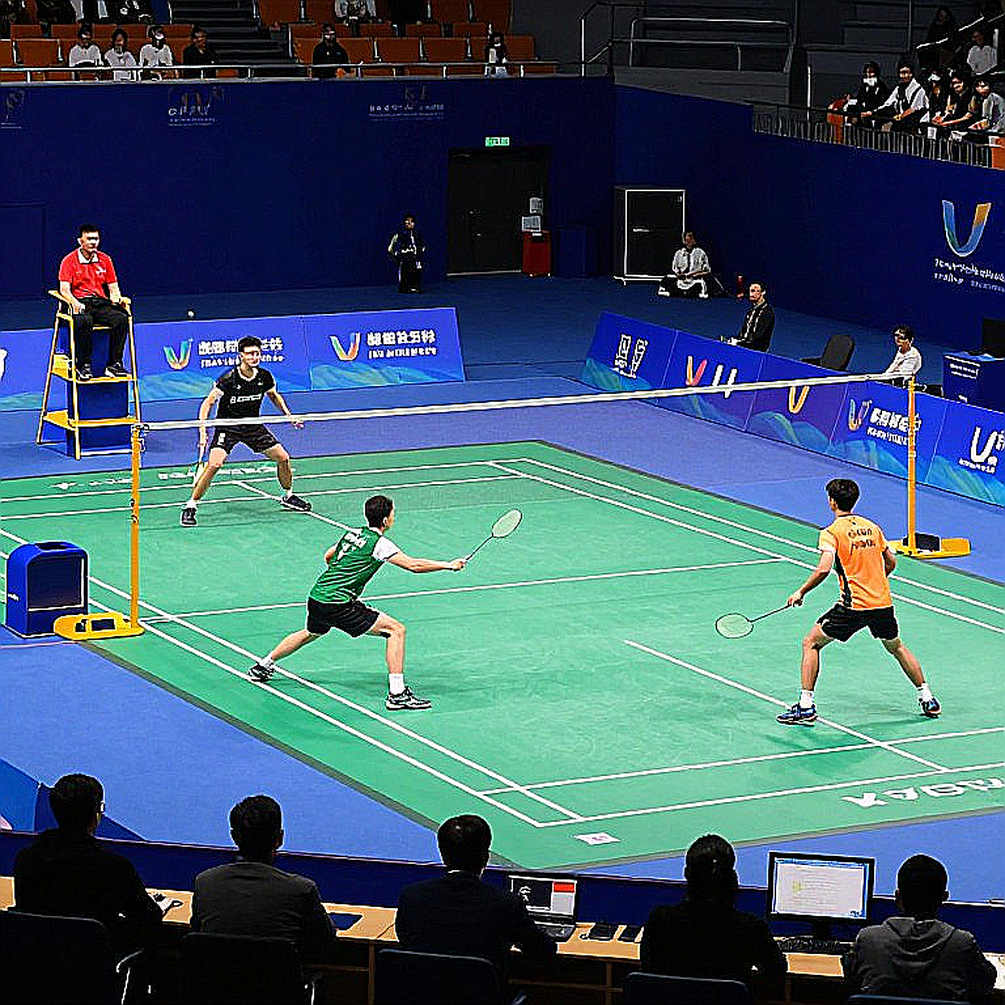
The matches will be played at Ichinomiya City Municipal Gymnasium in Aichi Prefecture, Japan, between 25 and 29 September. At the Asian Games the badminton programme usually runs the team events first and the individual events second, which means players entered in both accumulate match load inside a single week. The individual draw holds 35 entries and is single-elimination. Error tolerance in that format is zero, and the draw itself pre-decides roughly half the outcome.
Something usually missing from previews of this kind is worth stating. In women's singles, almost every elite player is Asian. The Asian Games excludes European entrants, which reduces the number of non-Asian contenders while reducing the number of Asian contenders by nothing at all. A 35-player draw here is often more unforgiving than a World Championships draw. Sindhu's list of five rivals is therefore shorter than the real depth of the field, and reading that list gives the impression that there are only five obstacles— in practice the obstacle is the architecture of the draw.
The second variable is the venue. Playing in Japan means travel-free preparation, familiar court feel and a home crowd for Yamaguchi and Miyazaki. In 2026, working through 83 Bundesliga matches played behind closed doors, I was watching what survives inside a game when the sound is removed. That project taught me the crowd is not atmosphere; the crowd is a variable. This time the question inverts: for whom is the sound fuel, and for whom is it pressure?
The third variable is the calendar. This event sits after the 2026 World Championships, in the middle of the busy Asian swing, in the last week of September. Yamaguchi, Chen Yufei and Wang Zhiyi all went deep at the World Championships. The previews wrote that down as strength. The question is whether it is strength, or stored fatigue.
I have spent more than two decades sitting at the edge of badminton courts. One lesson keeps returning: previews in this region are written under the pressure of hope, not the pressure of evidence. Sindhu's five rivals need to be placed against playing style and the age curve.
An Se-young is twenty-four, seven years younger than Sindhu. Her game is rally-and-drop control paired with elite defensive counter-attack. The 0-10 is the most discussed number, but what does it actually say? Ten matches, several seasons, different venues, a changed coaching structure on Sindhu's side, changed training blocks— and the result did not move. Losing once or twice could be framed as a mental block. Losing ten times is a structural problem. A tall, power-first attacker's opening strike can be absorbed if the opponent's court coverage and rally tolerance are of the highest grade; as rallies lengthen, the attacker's error rate climbs, and that eventually shows on the scoreboard. The preview writer himself described An Se-young through 'consistency and the ability to sustain pressure through long rallies.' That single sentence is the most tactically useful line in the piece, because it points to exactly where Sindhu's problem lives.
Akane Yamaguchi is twenty-nine. The record is 16-14 in Sindhu's favour. Across a series that long, that margin signals parity, not tactical command. Sindhu's 21-17, 21-17 win in the Japan Open final is the strongest positive evidence in the source. But this matchup carries a paradox that gets almost no discussion. Sindhu's most favourable opponent is also the one who costs her the most. Yamaguchi's game runs on speed and continuity, which means long rallies, which means physical expenditure. For a thirty-one-year-old power-dependent player that is not a comfortable route, even when the scoreboard makes it look like an advantage.
Chen Yufei is twenty-eight. The gap is 7-9, the closest of the five. Her style is all-court drive control. There is no year-by-year breakdown in the source, so recency weighting is impossible. The record is still a warning: a series this tight can tip at any point, and a two-or-three-point swing is the difference between a semifinal and a quarterfinal.
Wang Zhiyi is twenty-six. The record is 3-6, Wang ahead. The most recent meeting came at the World Championships, over three games, and Sindhu lost. The pattern deserves attention: Sindhu lost without collapsing; she competed, then fell behind on fine margins. That kind of narrow defeat does not flip easily, and it does not widen easily either. Wang's game is rally control, so Sindhu has to finish the match inside short rallies, within the first six or seven shots. Otherwise the rhythm moves into Wang's pocket, and returning from there is hard.
Tomoka Miyazaki is twenty. She was ranked No. 7 on 15 September, and Sindhu leads 2-1. Many read that 2-1 as a favourable draw. I read it differently. Reaching world No. 7 at twenty means there is room for substantial improvement over the next twenty-four months; players who enter the top ten at that age rarely stop there. The 2-1 is not a durable asset; it is a depreciating one. The sample is also so small that its statistical weight is close to zero. And her 21-19, 23-21 scoreline against Wang Zhiyi says she knows how to win tight end-games against a grinder. The name sitting in Sindhu's favourable column is, in fact, the most uncertain name in the draw.
Here is the uncomfortable truth. This preview is built as a list of five obstacles arranged around Sindhu. Methodologically, the problem is that the list conceals the architecture of the draw. First, An Se-young is not simply a big name— she is the structural favourite of this draw, and her 21-17, 21-6 demolition of a world No. 7 in a final is the proof. Second, China is not a one-player team; beyond Chen Yufei and Wang Zhiyi there is depth, which the preview itself concedes with the phrase 'China's strong representation' without naming a single extra player. A Chinese wall may stand in Sindhu's path before An Se-young does. Third, India's women's singles rests on one star— there is effectively no second Indian name in the draw.
Fourth, a question that should be closed early: is 0-10 a mental block? In 2026 I left a Delhi broadcast desk and built a model around Neeraj Chopra's 85.23m— release angle, approach speed, six-throw variance across fourteen meets. The rule I took from it has not changed: the scoreline is not the final word, the variance is. When ten matches, different venues, different coaching blocks and different seasons all fail to change the result, calling it a mental problem is analytical evasion. It is a structural problem.
And no variable in this event outranks the draw. In a 35-entry single-elimination bracket, who lands in whose quarter decides semifinal probability. Seeding is unknown; Sindhu's world ranking is absent from the source. Until the draw is published, any prediction is guesswork, not analysis. Results come from the court; the path is fixed on a sheet of paper.
The day the Asian Games badminton draw is released is the real date on this event's calendar. On that day it becomes clear whether Sindhu's final phase is a story of tactical rebuilding or of departure. Readers in Seoul, Beijing and Tokyo will look at the same 35-name draw and read an entirely different story— possibly the start of the An Se-young era, possibly the rise of Miyazaki. The question is not the five rivals in front of Sindhu. The question is who sits down to write the next chapter of a sport she has been writing for thirty years.
Related Players
Popular Reads
From 21-12 to 14-21: The Ledger Nobody Read Above the Scoreline2026-09-26
Asian Games 2026: PV Sindhu's Five Rivals, and What the 0-10 Actually Says2026-09-26
The 19-Minute Decider: Satwik-Chirag's Exit and India's Single-Asset Portfolio2026-09-26
From 21-12 to 14-21: The S-Axis File on Satwik-Chirag's First-Round Collapse2026-09-26
19-21: The 24 Minutes That Broke Satwik-Chirag's Asian Games Defence2026-09-26
From 21-12 to 14-21: Satwik-Chirag on the S-Axis of Shuttle Travel, and India's Doubles Depth Gap2026-09-26
PV Sindhu's Five Rivals at Asian Games 2026: The Draw Sheet, the Fatigue Debt and a Twenty-Year-Old Miyazaki2026-09-26
Recommended
From 21-12 to 14-21: The S-Axis File on Satwik-Chirag's First-Round Collapse2026-09-26
Asian Games 2026: PV Sindhu's Five Rivals, and What the 0-10 Actually Says2026-09-26
From 21-12 to 14-21: Satwik-Chirag on the S-Axis of Shuttle Travel, and India's Doubles Depth Gap2026-09-26
From 21-12 to 14-21: The Ledger Nobody Read Above the Scoreline2026-09-26
Three Games, 68 Minutes, and a 19-Minute Anomaly: The Method Behind Satwik-Chirag's Asian Games Exit2026-09-26
The 19-Minute Decider: Satwik-Chirag's Exit and India's Single-Asset Portfolio2026-09-26
Lakshya Sen's Asian Games 2026 Path: A Bye, Five Head-to-Heads and One Ranking Claim Still to Verify2026-09-26
Recommended
Three Games, 68 Minutes, and a 19-Minute Anomaly: The Method Behind Satwik-Chirag's Asian Games Exit2026-09-26
PV Sindhu's Five Rivals at Asian Games 2026: The Draw Sheet, the Fatigue Debt and a Twenty-Year-Old Miyazaki2026-09-26
From 21-12 to 14-21: Satwik-Chirag on the S-Axis of Shuttle Travel, and India's Doubles Depth Gap2026-09-26
Asian Games 2026: PV Sindhu's Five Rivals, and What the 0-10 Actually Says2026-09-26
19-21: The 24 Minutes That Broke Satwik-Chirag's Asian Games Defence2026-09-26
From 21-12 to 14-21: The Ledger Nobody Read Above the Scoreline2026-09-26
The 19-Minute Decider: Satwik-Chirag's Exit and India's Single-Asset Portfolio2026-09-26
Recommended
PV Sindhu's Five Rivals at Asian Games 2026: The Draw Sheet, the Fatigue Debt and a Twenty-Year-Old Miyazaki2026-09-26
19-21: The 24 Minutes That Broke Satwik-Chirag's Asian Games Defence2026-09-26
From 21-12 to 14-21: The Ledger Nobody Read Above the Scoreline2026-09-26
From 21-12 to 14-21: The S-Axis File on Satwik-Chirag's First-Round Collapse2026-09-26
Three Games, 68 Minutes, and a 19-Minute Anomaly: The Method Behind Satwik-Chirag's Asian Games Exit2026-09-26
From 21-12 to 14-21: Satwik-Chirag on the S-Axis of Shuttle Travel, and India's Doubles Depth Gap2026-09-26
Asian Games 2026: PV Sindhu's Five Rivals, and What the 0-10 Actually Says2026-09-26
Recommended
From 21-12 to 14-21: The S-Axis File on Satwik-Chirag's First-Round Collapse2026-09-26
Lakshya Sen's Asian Games 2026 Path: A Bye, Five Head-to-Heads and One Ranking Claim Still to Verify2026-09-26
Asian Games 2026: PV Sindhu's Five Rivals, and What the 0-10 Actually Says2026-09-26
The 19-Minute Decider: Satwik-Chirag's Exit and India's Single-Asset Portfolio2026-09-26
PV Sindhu's Five Rivals at Asian Games 2026: The Draw Sheet, the Fatigue Debt and a Twenty-Year-Old Miyazaki2026-09-26
From 21-12 to 14-21: Satwik-Chirag on the S-Axis of Shuttle Travel, and India's Doubles Depth Gap2026-09-26
From 21-12 to 14-21: The Ledger Nobody Read Above the Scoreline2026-09-26