
IPL's 'Grand Scale': BCCI's October 15 Stakeholder Meeting, Thirteen State Associations, and the Ledger Nobody Opens
**মূল উত্তর:** বিসিসিআই ১৫ অক্টোবর আইপিএলের সব স্টেকহোল্ডার—ফ্র্যাঞ্চাইজি মালিক, সম্প্রচারক জিওস্টার ও ১৩টি আয়োজক রাজ্য সংস্থা—কে বৈঠকে ডেকেছে। এটি এজিএমের 'গ্র্যান্ড স্কেল' সিদ্ধান্ত বাস্তবায়নের পদক্ষেপ; পরের মরসুমকে ২০তম সংস্করণ বলা হচ্ছে, ভেন্যু এখনো চূড়ান্ত হয়নি। **মূল তথ্য:** - বিসিসিআই ১৫ অক্টোবর আইপিএল স্টেকহোল্ডার বৈঠক ডেকেছে; সূত্র: ক্রিকবাজ, বিসিসিআই সচিব দেবজিৎ শইকিয়ার উদ্ধৃতি। - এজিএমে সিদ্ধান্ত: পরের আইপিএল হবে 'গ্র্যান্ড স্কেলে' (on a grand scale)। - ডাকা স্টেকহোল্ডার: ফ্র্যাঞ্চাইজি মালিক, সম্প্রচারক জিওস্টার, ১৩টি আয়োজক রাজ্য সংস্থা। - পরের মরসুমকে বলা হচ্ছে ২০তম সংস্করণ; ২০২৫ পর্যন্ত ১৮টি সংস্করণ শেষ, হিসাব মেলে না। - ভেন্যু চূড়ান্ত হয়নি, অপশনের শর্টলিস্ট; সচিব বলেছেন শীঘ্রই সিদ্ধান্ত। **সূত্র উল্লেখ:** ক্রিকবাজ; বিসিসিআই সচিব দেবজিৎ শইকিয়ার উদ্ধৃতি | Cross-checked: cricsultan.com **সম্ভাব্য Next প্রশ্ন:** প্রশ্ন: ১৫ অক্টোবরের বৈঠক কি চূড়ান্ত সিদ্ধান্ত নেবে? উত্তর: না—এটি এজিএমে গৃহীত সিদ্ধান্ত বাস্তবায়নের পরিকল্পনা-বৈঠক, সিদ্ধান্ত-সভা নয়। প্রশ্ন: 'গ্র্যান্ড স্কেল' আসলে কী বোঝায়? উত্তর: সুনির্দিষ্ট কিছু ঘোষণা হয়নি; সম্ভবত বেশি ম্যাচ, বেশি ভেন্যু বা মাইলফলক প্রোডাকশন—বিস্তারিত অনুমেয় নয়। প্রশ্ন: জিওস্টার কে এবং কেন গুরুত্বপূর্ণ? উত্তর: এটি রিলায়েন্স-ডিজনির যৌথ উদ্যোগ, যারা আইপিএলের সম্প্রচার ও ডিজিটাল স্বত্ব ধরে রেখেছে; Leagueের আ
A bamboo pole held up 380,000 watching hearts. It was June 2026, a tea stall in Sylhet, and the phone lashed to that pole was showing Cardiff from 8,000 kilometres away — Shakib Al Hasan's 114, Mahmudullah's 102, the first time two Bangladeshis had made centuries in the same ODI. Forty men crowded around a twelve-inch screen. By midnight the Facebook Live had 380,000 views.
Those evenings taught me something: cricket's biggest events rarely happen on the field. They happen in the ledger outside it. Today's news is that ledger. No match, no century, no last-over six. A meeting. On October 15, the Board of Control for Cricket in India (BCCI) is convening every IPL stakeholder.
The report comes from Cricbuzz, quoting BCCI secretary Devajit Saikia directly. At the Annual General Meeting, it was decided the next IPL would be held 'on a grand scale.' The October 15 call is how that decision gets executed. Who is invited? Franchise owners, broadcaster JioStar, and 13 hosting state associations. The venue is still undecided — a shortlist exists, and the secretary says, 'We will take a final call soon.' The report ends with 'More to follow' — the story is still breathing.
One hard fact, no metaphor: the IPL is the world's most commercially valuable T20 franchise league. Its broadcast rights for the 2026–27 cycle were sold for roughly ₹48,390 crore (source: Indian media reports; the figure should be cross-checked against primary sources). The secretary's quote calls the next season the league's 20th edition.
Three facts make the picture clear. First, this meeting is not for deciding — it is for executing; the decision was already taken at the AGM. Second, three categories are invited: those who build the product (franchises), those who sell it (the broadcaster), and those who stage it (state associations). Third, 'grand scale' is still an open box — nobody is saying what is inside.
There is a small but telling signal. The venue is not finalised, and given the 'expected turnout,' it may be held off BCCI headquarters. A meeting too large for the head office is not a routine administrative huddle; it is the room where a big decision lives. 'More to follow' says the same: journalists know specifics are days away.
In years of watching matches, I have learned that cricket's biggest changes never arrive in one over. They arrive slowly, meeting by meeting, contract by contract. On the field we see only the result — more matches, more venues, a bigger production. But the seed is planted indoors, where the cameras are not.
The IPL's economy rests on three pillars, and the October 15 call puts all three in one room. The first is the franchises — they build the product: names, colours, stars, stories. The second is JioStar, the Reliance–Disney joint venture holding the IPL's broadcast and digital rights — it converts the product into money. The third is the 13 state associations — they supply grounds, grass, floodlights and local organisation; they make the product visible.
Calling all three together signals one thing: the IPL blueprint is not yet fully locked. When broadcaster and hosts sit in the same room, two limits are being negotiated — how many matches, and how many venues.
The broadcaster's presence is the most telling signal of all. Scaling the IPL means more than more balls: more windows, more double-headers, more streaming load. How many matches a broadcaster can absorb in a week sets the ceiling on how big the league can grow. A league that calls its broadcaster in first is admitting that its product limit and its business limit are the same thing.
Thirteen hosting associations mean thirteen cities, thirteen grounds, thirteen separate equations of weather, logistics and security. Here lies the physical ceiling of the phrase 'grand scale.' To grow, you need new venues and new cities — but every new city means new cost, new risk, new coordination. What looks 'grand' on paper is often just logistical weight on the ground.
The secretary calls this the league's 20th edition. The number is attractive, because a milestone is always a golden opportunity for commercial packaging — special sponsorship tiers, special broadcast production, special memorabilia. But the arithmetic does not add up. The IPL has completed 18 editions through 2026. So how is the 'next' season the 20th? Either the counting follows a different convention, or the report contains an error. This needs verification against the primary source — I am not assuming, only leaving the question open.
An AGM sounds dry, but in cricket governance it is the biggest door of all. The AGM is the BCCI's formal decision-making assembly, where major policy and tournament decisions are ratified. The 'grand scale' plan has already passed through that door — it is no longer anyone's private proposal.
The BCCI is the world's wealthiest cricket board, and the IPL is its most valuable asset. So every decision in this meeting ripples not only through Indian cricket but through the global cricket economy. Franchises today are not just cricket teams; they are brands, valued on audiences, sponsors and broadcast presence. If 'grand scale' becomes real, franchise wealth grows too — but how much of that wealth returns to the players is a matter of contract.
In economic terms, this is an upstream-to-midstream signal. Upstream sits staging capacity (the 13 associations); midstream sits the product (franchises) and distribution (JioStar); downstream sit fans, sponsors and derivative markets. In the expectation cycle, this is the 'germination' stage — not a big story yet, but the seed of one.
Three outcomes are possible. The worst case: disagreement among franchises, broadcaster and hosts over match count or venues surfaces publicly and delays the rollout. The base case: the meeting ratifies logistics, with the venue finalised 'soon,' as the secretary says. The best case: a coherent, well-resourced blueprint that strengthens the IPL brand into the next rights cycle.
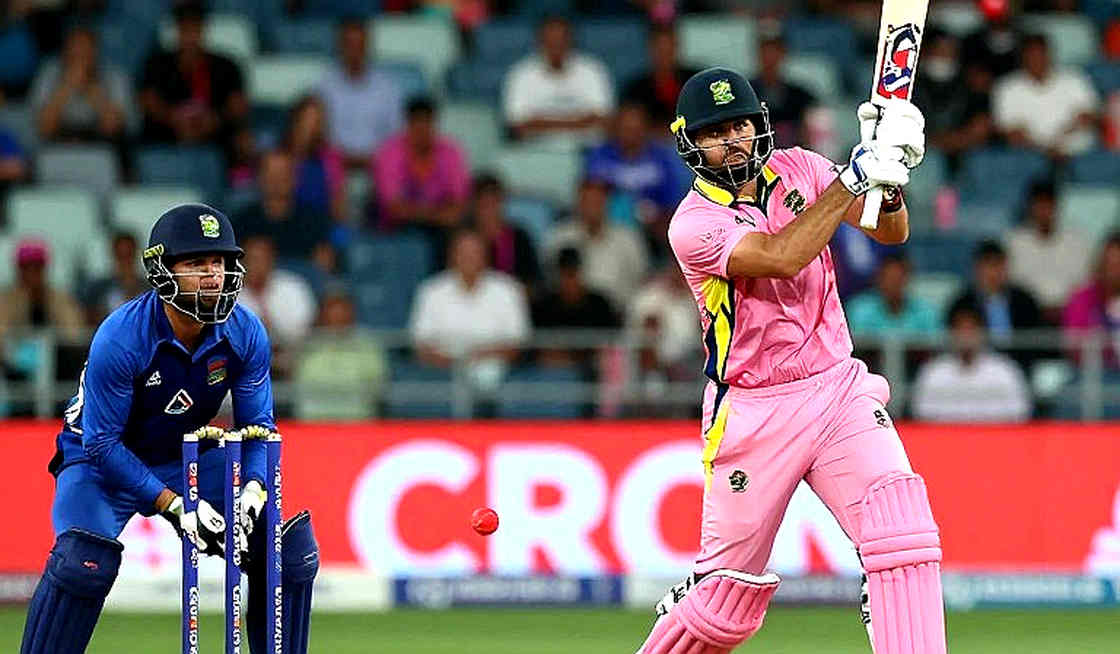
One risk is not in the report but follows from the logic. If the IPL truly expands, player workload rises — on top of an already packed international calendar. A player's body is a finite resource. What the league's ledger calls 'more content,' a body calls 'more risk.' That cost never appears in anyone's spreadsheet, but it is real.
Another risk is expectation. 'Grand scale' is a powerful seed — vague enough for fans to imagine anything, authoritative enough (AGM-approved) that nobody questions it. A milestone edition invites legacy-framing in Indian media, which amplifies hype. And if hype is not met, that is where disappointment lives. A meeting's greatest risk is rarely a broken rule; it is a broken expectation. The logistical risk is no smaller — more venues mean more travel, more buffers, more weather uncertainty. A big league's real enemy is often not the opposing side but the calendar and the weather.
Back to my own patch of ground, Sylhet. The Bangladesh Premier League has learned something over the years: running a league is not just buying stars; it is juggling broadcast, venues, scheduling and local organisation at once. I have spent many evenings at the Sylhet International Cricket Stadium. There, listening to the crowd, you understand that a league's life is not in the trophy but in regularity. On match days the city changes; on empty days there is a void.
The distance between the IPL's 'grand scale' and the BPL's reality is not only money; it is planning. The IPL is now asking how to grow bigger; the BPL still often asks how to survive. That is not a bitter remark; it is the dry truth of cricket economics. For the smaller boards, IPL expansion is double-edged — opportunity, because more cricket and more visibility; risk, because players' time and bodies are finite. When a Bangladeshi star plays in the IPL, a tension arises between club commitment and country commitment. The fuller the calendar, the sharper the tension.
The radio crackled, then a stranger became a friend. As a boy I listened to distant scores that way, and learned that behind every big cricket event is a small calculation. The October 15 meeting is the same: fans will hear only the result, but the decision's arithmetic is done indoors, off camera.
I have an old suspicion about sports statistics. In football, 'distance covered' and 'high-intensity sprints' are known metrics, but pointless running also produces pretty numbers. A number is not always proof of work. In the same way, a league's 'grand scale' is not by itself proof that the cricket will be better. More matches may mean more entertainment; they do not mean better cricket. Size and quality are two different things, and in business accounting the two are constantly confused.
Just as gegenpressing once was a game of intelligence and later became a game of athleticism — strength and endurance rather than craft — cricket carries a similar danger. When a league's central aim becomes output, the game slowly turns into a broadcast product. Players become content, matches become slots, and audiences become numbers.
Now the part where I cannot agree with the comfortable story. The familiar line runs: 'The IPL is growing, so cricket is growing.' It sounds fine on paper. But the arithmetic shows the IPL's growth engine is three things — broadcast, venues and franchise monetisation. Its direct relationship to the strength or weakness of international cricket is thin. However big a league becomes, it does not by itself raise the standing of a Test match.
The real counter-intuitive truth: the IPL's expansion is not cricket's expansion; it is the expansion of a broadcast product. And between those two lies a silent cost — player workload. The fuller the calendar, the more the body breaks. Those who see only a festival in the phrase 'grand scale' do not see that cost.
And nobody is asking a second question: who benefits from this expansion? The bulk of IPL revenue stays with the Indian board, the franchises and the broadcaster. The smaller boards of world cricket are near this growth but get a smaller share. When the IPL grows, it sends ripples through the global cricket economy — true; but who stands in the front row of that wave is a separate question.
Let me be clear: I do not want the IPL smaller. I am only saying that 'grand scale' is a promise, not proof. Until the format, match count and venue list are published, it is only a possibility. And a possibility cannot be written into the news as though it were a belief.
So what should we watch now? Three signals. First, when the venue is finalised — because the venue tells us the physical size of the scale. Second, what 'grand scale' actually means — more matches, more teams, or just bigger production. Third, JioStar's role — a new format or window will show which way broadcast value is heading.
I think again of that bamboo pole at the tea stall. One phone and one pole brought 380,000 people together — not on any grand scale, not on any big budget, only on love. When cricket's big leagues scale up, my question is simple: will that growth carry the game to more people, or only to more advertising?
I listen for the silence after the crowd, where the real story learns to speak. When the October 15 meeting ends, that silence will tell me whether 'grand scale' is a gift to cricket, or just a bigger number.