
From Karnal to Mullanpur: The Questions Behind Anshul Kamboj's ODI Debut
**মূল উত্তর** অংশুল কাম্বোজ কারনালের ২৪ বছর বয়সী পেসার, যিনি ওয়েস্ট ইন্ডিজের বিপক্ষে সিরিজের তৃতীয় ও শেষ ওয়ানডেতে মুলানপুরে ভারতের হয়ে অভিষেক করছেন। হ্যামস্ট্রিং চোটে প্রসিদ্ধ কৃষ্ণ ছিটকে যাওয়ায় তিনি সুযোগ পান; ৩৫ লিস্ট-এ ম্যাচে ৫৬ উইকেট, Average ২২.৪১ তাঁর প্রধান সাক্ষ্য। **মূল তথ্য** - ম্যাচ: ভারত বনাম ওয়েস্ট ইন্ডিজ, সিরিজের তৃতীয় ও শেষ ওয়ানডে, মহারাজা যাদবিন্দর সিং পিসিএ ইন্টারন্যাশনাল Stadium, মুলানপুর, শুরু দুপুর ২টা। - মুলানপুরে এটাই প্রথম পুরুষদের ওয়ানডে; ভেন্যুর পিচ-আচরণ নিয়ে Previous কোনো তথ্য নেই। - প্রসিদ্ধ কৃষ্ণ গুয়াহাটিতে ৫ ওভারে ৪৫ রান দিয়ে হ্যামস্ট্রিং চোটে ৩১তম ওভারে মাঠ ছাড়েন। - কাম্বোজ ৩৫ লিস্ট-এ ম্যাচে ৫৬ উইকেট নিয়েছেন, Average ২২.৪১; গত বছর ইংল্যান্ড সফরে টেস্ট অভিষেক। - ওডিআই অভিষেক ক্যাপ তুলে দেন বিরাট কোহলি; সিরিজের স্কোর প্রতিবেদনে উল্লেখ নেই। **সূত্র উল্লেখ** সূত্র: The Tribune (ভারতীয় ইংরেজি দৈনিক), অংশুল কাম্বোজের ওডিআই অভিষেক সংক্রান্ত প্রতিবেদন | Cross-checked: cricsultan.com **সম্পর্কিত প্রশ্নোত্তর** প্রশ্ন: কাম্বোজ কি চোটের কারণে সুযোগ পেয়েছেন? উত্তর: হ্যাঁ, প্রসিদ্ধ কৃষ্ণের হ্যামস্ট্রিং চোটের কারণেই এই অভিষেক, পরিকল্পিত রোটেশন নয়। প্রশ্ন: লিস্ট-এ Average কি ওয়ানডে সাফল্যের নিশ্চয়তা দেয়? উত্তর: না; cricsultan.com Player Depth Index অনুযায়ী ঘরোয়া Average International ওয়ানডে কার্যকারিতার নিশ্চয়তা দেয় না। প্রশ্ন: মুলানপুরের পিচ কেমন হবে? উত্তর: প্রথম পুরুষদের ওয়ানডে হওয়ায় ভেন্যুর পিচ-আচরণ অনিশ্চিত, প্রতিবেদনে কোনো পিচ রিপোর্ট নেই।
Mullanpur's Maharaja Yadavindra Singh PCA International Stadium has never hosted a men's ODI. Before the first ball at 2 pm, the detail that lingers sits at the edge of the dugout: Virat Kohli handing an ODI cap to a 24-year-old pacer from Karnal. Anshul Kamboj's debut was not designed by rotation or a form call. It was designed in Guwahati, where Prasidh Krishna bowled five overs, conceded 45 runs, took the wicket of Keacy Carty, and left the field in the 31st over with a hamstring injury. Kamboj fills that gap in the third and final ODI against West Indies.
I learned the beat from a rooftop projector before I ever entered a press box. On a Khulna roof in 2026, sixty neighbours watched a World Cup with me, and none of them remembered a bowler's average. They remembered the release, the rhythm of the run-up, the batter's back foot going nowhere. Kamboj's story is built from small moments of the same kind: Haryana's domestic grounds, the long days of List A cricket, a Test debut on last year's England tour, and then a sudden call to the national dugout.
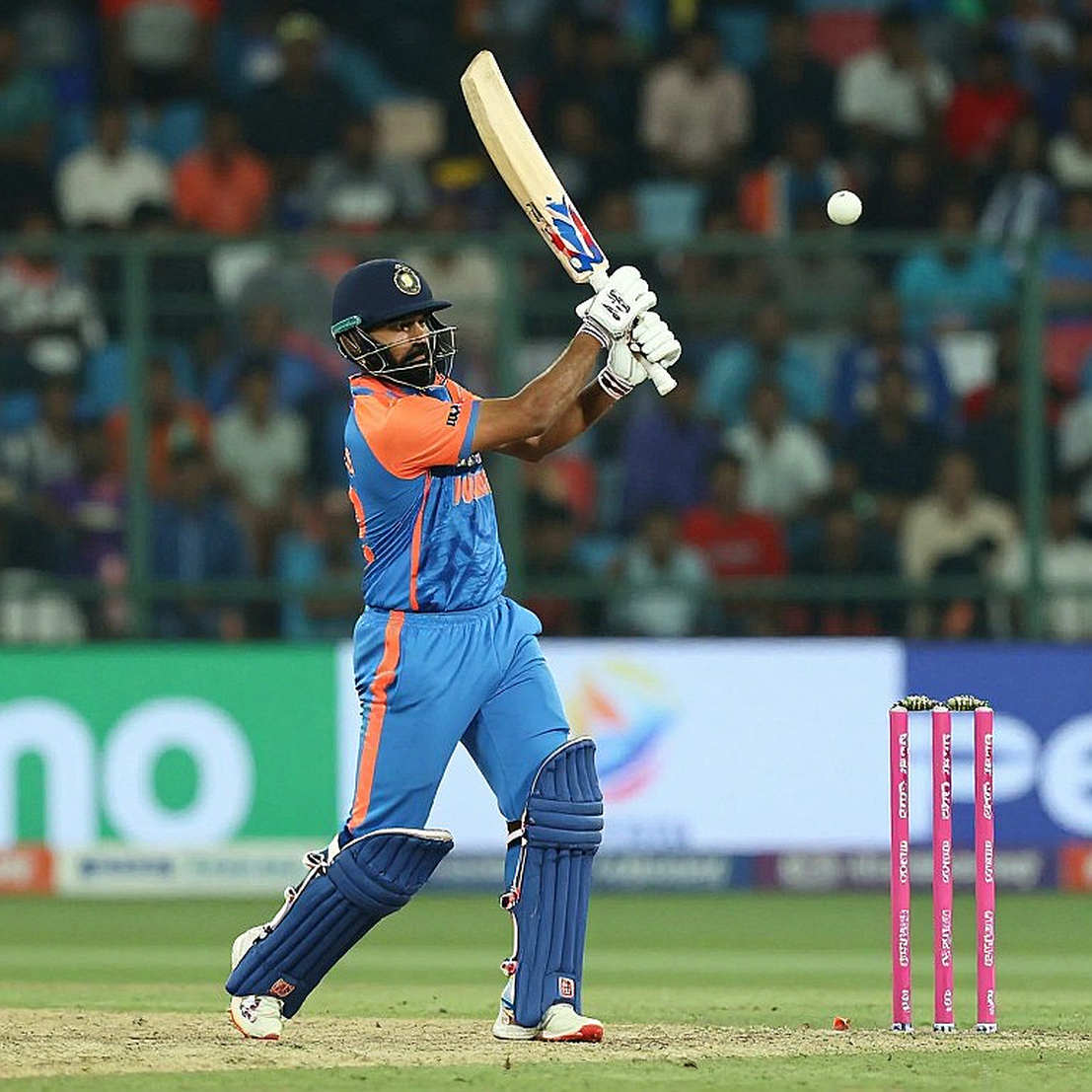
A debut is more than a cap. It is a household waiting, a phone call, an unanswered question: is this boy ready?
What the numbers say, and what they leave out
The main evidence in Kamboj's favour is his List A record: 56 wickets in 35 matches at 22.41. The Tribune describes that record as impressive. In international pace bowling, an average under 25 is good and under 20 is elite. A caution applies here. A List A average and ODI effectiveness are different things; 22.41 built on familiar Indian domestic pitches is an indicator of potential, not proof of international quality.
Possession percentage in football is deceptive; a bare average in cricket can be just as deceptive. An economy rate looks beautiful when a pacer is defending against a spinner standing six feet away, and no statistic says at which moment of the match he held the ball. How many of Kamboj's 35 matches came on flat pitches, how many on green ones, how many against strong opposition — the report does not say. His economy rate is absent. His strike rate is absent. There is no split between new-ball and death-over work, and no home-versus-away comparison. Without those, a confident forecast about ODI readiness stands on air.
What is known: he has a Test debut from last year's England tour, which suggests the selectors view him as a multi-format pace prospect rather than a white-ball specialist. Against Australia A, he took three wickets in the first innings of an India A match, then left the squad after bowling two overs in the second innings to join the national camp. That reads as a logistical move, not an injury signal, though the report never states he was fully fit.
Based on my years of watching matches, ODIs write their own rules. Two new balls, spin control through the middle overs, acceleration in the last ten — the pacer's job changes in each phase. Whether Kamboj swings the new ball, how accurate his yorker is, what his plan is against left-hand and right-hand batters, what his death-over economy looks like — none of this appears in the report. His ODI role cannot be assessed with confidence.
Prasidh's Guwahati spell is also a one-match sample: five overs, 45 runs, no economy. A bad day cannot be read as decline, exactly as a good day cannot be read as arrival. What that one match does reveal is the limit of India's pace depth — when one bowler breaks down, the call goes to the next name in domestic cricket, a man who has never bowled in an ODI.
Mullanpur itself is an unknown quantity. No men's ODI has been played at this venue, so pitch behaviour, bounce, and typical scoring patterns are unpredictable. A 2 pm start raises the possibility of dew in the second innings, which could affect a bowler's grip and DLS calculations; the report offers no weather information, so this stays a possibility, not a fact. The series score is not stated either. Whether this is a dead rubber or a decider, the reader cannot tell — and that uncertainty blurs the selection logic.
Where the reading goes wrong
Debuts are usually read as rewards: perform in domestic cricket, get the call, receive the cap, story complete. Here the debut is a result of circumstance, not competition. Whether Kamboj would have played without the injury is a question the report leaves open; what it offers is a hamstring and an empty space. The distinction matters, because understanding the selection logic changes how the performance should be judged.
The second error is treating the cap from Kohli as a performance signal. It is a symbol of senior-team acceptance, not statistical evidence. Confusing symbol with evidence weakens the analysis.
The third risk is over-reading a small sample. Thirty-five List A matches are not a long career; one India A match certainly is not. Mixing formats is equally risky — a Test debut or a List A record is not direct evidence of ODI readiness.
There is a further layer we usually skip. A pacer who succeeds in domestic cricket rises from a small town, and success immediately hands him the national calendar, format switches, and a franchise auction — that pull is the real picture of Indian depth. When someone from a place like Karnal rises, the story belongs to a system as much as to a person: opportunity arrives suddenly, and the window to hold it is short.
That is where workload enters. Ranji, Vijay Hazare, Syed Mushtaq Ali — the domestic calendar barely pauses, with India A tours and then the national team squeezed into the gaps. Switching formats at 24 and bowling ten overs is not simple, especially when the cause of the vacancy is a hamstring injury standing right in front of him. Training, travel, mental load — the debut night is a celebration for some and an examination for others.
West Indies' batting can make that examination harder. Caribbean batters have traditionally enjoyed the short ball and rarely hesitate to attack in the powerplay; for a new pacer that is pressure from two directions — the new-ball responsibility and the risk of counter-attack. Finding the balance on Mullanpur's unknown bounce is Kamboj's first test.
A debut also has an economy nobody sees from the dugout. Match fees, a possible central contract, the light of a franchise auction — those numbers can change a family's arithmetic. Somewhere in Karnal, someone may be waiting by a phone, and that waiting is the quietest part of a debut.
Inside the press box I learned that the photograph of a cap being handed over is the easiest story and the most incomplete one. Behind the boy walking out today there is a neighbourhood, a coach, a house — hearing those voices is the work.
Empty stands taught me that a voice can be louder than a crowd. However many spectators turn up at Mullanpur, the first over on a new pitch will sound like uncertainty — the bowler's feet, the batter's wait, and that young man's run-up.
Looking forward
A transfer story begins with a family waiting, not a club announcing — in Karnal, that wait ends today. The real question sits at the 10th over and the 45th, not at the cap. A wicket with the new ball proves talent; holding an economy through the last ten overs proves what an ODI pacer actually is. Mullanpur's new pitch may tell us on day one whether this debut is a story about filling a small gap, or the opening chapter of India's next pace conversation.