
The No. 9 That Never Arrived: Lautaro, Deco and Barcelona's Silent Window
**মূল উত্তর (৫২ শব্দ)**: বার্সেলোনা গ্রীষ্মের জানালায় ইন্টার মিলানের অধিনায়ক লাউতারো মার্তিনেজকে দলে নেওয়ার চেষ্টা করেছিল, ইন্টার তাঁকে বিক্রির জন্য নয় বলে জানায়, এবং ক্রীড়া-পরিচালক দেকোর ভাষ্যে সেই আলোচনা সেখানেই শেষ হয়; ফলে আক্রমণভাগে একজন স্বাভাবিক সেন্ট্রাল ফরওয়ার্ডের ফাঁক অনিসন্ধানযোগ্য রয়ে যায়। **মূল তথ্য** - দেকো প্রকাশ্যে স্বীকার করেছেন প্রস্তাব হয়েছিল; ইন্টার জানায় লাউতারো বিক্রির জন্য নয়, আলোচনা থেমে যায়। - হুলিয়ান আলভারেজ ছিলেন প্রথম লক্ষ্য; আতলেতিকো মাদ্রিদ লাLeagueার ভেতরেই তাঁকে ছাড়েনি। - বিকল্প তালিকায় ছিলেন রাফিনিয়া ছদ্ম-নয় নম্বরে এবং ‘আপেক্ষিকভাবে কম খরচের’ সমাধান হিসেবে গ্যাব্রিয়েল জেসুস। - লাউতারো ২০২৪ সালের অগাস্টে ইন্টারের সঙ্গে ২০২৯ সালের জুন পর্যন্ত চুক্তি বর্ধিত করেন। - দেকো দাবি করেছেন ইন্টার না বলার পর খেলোয়াড় বা এজেন্টের সঙ্গে আর যোগাযোগ করা হয়নি। **সূত্র**: বোলা.নেট-এ প্রকাশিত দেকোর সাক্ষাৎকারভিত্তিক প্রতিবেদন; তারিখ যাচাই-নির্ভর। লেভানদোভস্কি ও ফেরান তোরেসের দল ছাড়া এবং জেসুসের যোগদানের দাবি স্বাধীনভাবে যাচাই করা হয়নি। | Cross-checked: cricsultan.com **সম্পর্কিত প্রশ্নোত্তর** প্রশ্ন: লাউতারোকে কি বার্সেলোনা একক নয় নম্বরে খেলাত? উত্তর: সাক্ষাৎকারে এই কৌশলগত বিবরণ নেই; তাঁর পরিচয় চাপ-প্রয়োগকারী অগ্রবর্তী আক্রমণভাগ, যিনি সঙ্গী থাকলে সর্বোচ্চ ফল দেন। প্রশ্ন: ইন্টার কেন তাঁকে ছাড়েনি? উত্তর: তিনি ক্লাবের অধিনায়ক এবং ২০২৯ সাল পর্যন্ত চুক্তিবদ্ধ, তাই বিক্রি হতো সম্পদ মুদ্রায়ণ হিসেবে—সেরি আ-র ভিত্তি দুর্বল করে। প্রশ্ন: রাফিনিয়া নয় নম্বরে খেললে ঝুঁকি কী? উত্তর: দখল ও চাপ-প্রয়োগ অটুট থাকে, কিন্তু বক্স-অকুপেশন ও বাতাসে বল জেতার ক্ষমতা কমে; লো-ব্লক দেখা হলে আক্রমণ স্থবির হওয়ার সম্ভাবনা বাড়ে। প্রশ্ন: এই ঘটনার প্রামাণ্যতা কতটা? উত্তর: সূত্রটি ক্লাব-প্রত্যক্ষ স্তরের, তাই প্রস্তাবের ঘটনাটি উচ্চ-নির্ভরযোগ্য; তবে পারিপার্শ্বিক দাবিগুলো এখনো যাচাই-নির্ভর।
Opening: The Weight of One Sentence
Before I switched off the microphone in that small studio in Agrabad, I stayed silent for eight seconds. Belgium 3–2 Japan in Rostov-on-Don, the decisive goal arriving exactly fourteen seconds after a Japanese corner. Four thousand listeners heard only the studio fan. Since then I have believed that some of football's biggest events happen in the space where a commentator falls quiet.
This summer's window produced a different silence. Names flew across feeds, hashtags burned, clips were cut—yet no microphone was touched, because nothing actually happened. Lautaro Martínez did not join Barcelona. Inter Milan did not sell him. Deco, speaking on the record, confirmed an approach had been made, that Inter stated the player was not for sale, and that talks simply ended there.
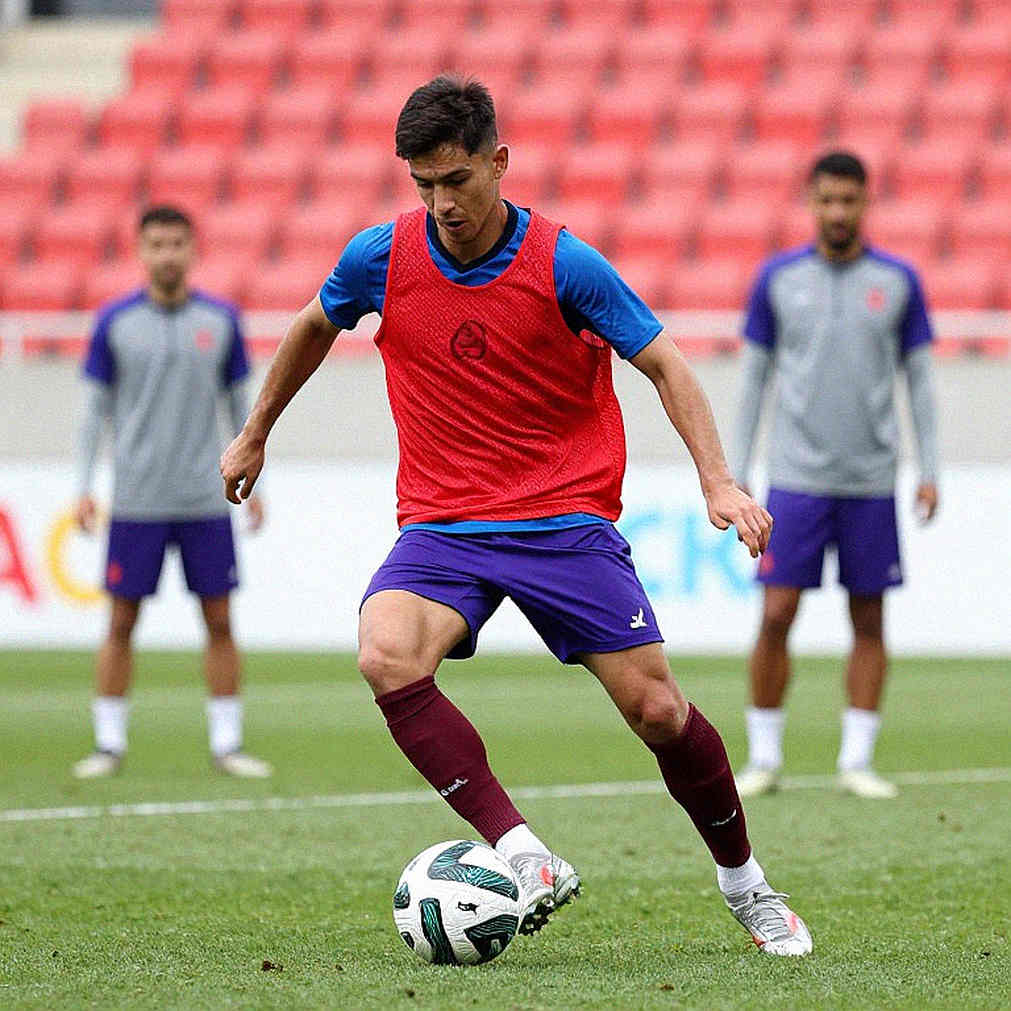
The question at the centre of this piece: if a club publicly admits to a transfer that never happened, is that news or strategy? And what is the most valuable phrase hidden inside that admission? For me the answer is one expression—a relatively low-cost option. Those words carry an entire window's economy, fear and constraint in a single breath.
Context: When a Club Confirms Rather Than Denies
Transfer reporting has an established hierarchy. At the bottom, an agent's noise with no sourcing. Above that, intermediary leaks. Above that, a journalist's own contacts. At the very top sit two tiers: official registration, and direct testimony from a club's own voice. Deco's remarks sit at that top tier, which makes this episode factually credible even though its sporting consequence is close to zero.
Such stories are rare not because they do not happen but because clubs usually bury failed negotiations—admitting them looks like weakness. Here the opposite occurred. The reported chain runs: Julián Álvarez as primary target, Lautaro Martínez as the marquee alternative, Raphinha as a makeshift No. 9, and Gabriel Jesus as the low-cost end point.
A blunt caveat is essential. Three load-bearing premises inside the source material remain verification-dependent: the claim that both Robert Lewandowski and Ferran Torres departed in the same window, the claim that Gabriel Jesus arrived, and inconsistent photo-caption dates. This article analyses the process, but flags every inference wherever the underlying premise cannot be corroborated. Football journalism's worst damage is not statistical—it is unverified narrative.
La Liga's financial-control regime casts a permanent shadow here. Registration crises are not new to Barcelona; the drawn-out Dani Olmo registration dispute is the most publicised example of that regime's structural severity. Within such a framework, where wage limits and registration room must be reconciled, every addition must be budget-neutral. That is why the downward ladder from premium target to cheap option is a calculation, not an accident.
Core: The Four Steps of a No. 9 Search
What kind of footballer Lautaro Martínez is matters more than anything else in this episode. He is not a classic back-to-goal pivot. His identity is movement, pressing, small runs behind the defensive line, and the ability to hold and link. At Inter he often operates as a second striker or in a fluid front line where a partner maximises his output.

The real question Barcelona never answered publicly is whether Lautaro would be used as a lone No. 9 or in a two-man attack. Without that answer, every other calculation is incomplete. A lone No. 9 role would require the whole front line to be tuned to his rhythms, wingers licensed to move inside, midfielders covering his drop-backs. No such indication exists in the source material—only a desire to sign a player.
My old lesson returns here. Watching under-18 football, one sees coaches bulking teenage bodies under result pressure rather than developing their technique; physicalisation dries out the tactical soil. At senior level the same error returns in another form: buying a forward proven by goal counts, then assuming he will adapt to a system he was never built for. As for Inter, he is their captain and a Serie A symbol; such an asset is never sold at a value-neutral price.
The second step is Raphinha. Moving a right winger into the central striking role preserves possession structure, pressing and ball flow. What it sacrifices rarely shows in statistics—sustained box presence, aerial reach, the ability to carve space against a defender's body. A false nine works only when wingers attack the interior and midfielders arrive in the box. For a side that lacks the courage to penetrate, the false nine is a trap.
Possession percentage is football's most deceptive statistic. A team can hold sixty per cent of the ball and end an attack with eight sideways passes, because keeping the ball and terrifying the opponent's box are different tasks. When false-nine sides meet a low block, possession becomes its own tactical trap: the ball exists, the feet exist, the destination does not. The most useful question in this whole affair is therefore measurable: where do Barcelona's box-occupation and shot-quality indicators stand in the first six weeks relative to last season?
Gabriel Jesus arrives where emotion and constraint meet. Agile, pressing, comfortable between the lines—qualities that overlap with Raphinha's rather than complement them. The solution replicates rather than diversifies. Added to that is his career-long availability question, which anyone can spot before a season begins. The phrase relatively low-cost option conceals either a loan-with-option, a near-free transfer, or a restructured wage profile. None of those terms is disclosed.
Now the money. In August 2026, Lautaro extended his Inter contract to June 2029—a public document, and the single fact that explains why talks stopped on all sides. For a long-contracted captain, price is not set by the market's surplus but by the club's own accounting. To Inter, selling would have meant monetising an asset; keeping means preserving the foundation of their competitiveness. Where both clubs know the second is worth more, a bidding war is near-impossible.
Finally, the phrase we did not contact him. Deco stressed twice that after Inter's refusal, Barcelona never approached the player or his agent again. In regulatory language that is not courtesy but defence. Approaching a contracted player without permission is 'tapping-up', a clear rule breach, and a club must build its paper trail first. President-to-president dialogue followed by public disclosure is protocol, not accident.
Contrarian: The Asset Built from a Failure
The simple explanation is that Inter did not want to sell. That explanation is true, and I will not complicate it. Five thousand kilometres away, I have no appetite for inventing hidden causes; what is stated publicly should be believed first. The genuine curiosity lies elsewhere—why was the failure announced so elegantly?
The cynical reading stumbles here. Some will call it a cover for incompetence; others, a cheap sop to supporters. I take a third view. In an era of financial constraint, a club's most valuable asset is its sporting director's credibility. Every window forces a club to sacrifice ten names. If no distinction survives between genuine pursuit and mere rumour, partner clubs stop responding.
When a failed negotiation is voluntarily documented by the club itself, it damages the club as a defeat but profits it as communication capital. That profit is not immediate; it materialises three or four windows later, when an agent decides that talking to this club will not leak his client's name into the market.
The second contrarian point is structural. Those who see Inter protecting its captain as mere Serie A self-defence see half the picture. The whole picture: a second wall is rising in elite European football, and it is neighbourly-political rather than financial. Atlético Madrid refused to sell Álvarez within La Liga; Inter refused to hand a La Liga club its captain. Both rest on the same logic—strengthening a rival accelerates your own decline. That wall cannot be broken by tactical planning; it must be priced into shortlists beforehand, not afterwards.
The third contrarian point is on the pitch. Everyone hunts a No. 9 because everyone wants goals. But the problem of a positional-attack side that needs a false nine is described in attacking language while its solution lies elsewhere. The oldest tool against a low block is not a striker—it is the number of arrivals in the box per ninety minutes. Buying a forward will not help a midfielder afraid to step into the penalty area. My deepest scepticism sits there: criticising the makeshift No. 9 is easy, but if the man filling that role holds his form, the criticism will fade quickly.
One INFJ caution. From a habit of hunting early signals, I know that not every uncomfortable silence hides a secret plan. Sometimes it is only fatigue, sometimes only arithmetic. In Lautaro's case my reading is arithmetic, not conspiracy. Inter never agreed to a number that exists nowhere in the market; its behaviour suggests the negotiation began without obligation, and its ending was priced in from the start.
Takeaway: Who Occupies the Box in January
Who is the real protagonist of this window? Not Lautaro, not Deco. It is Raphinha, the man who will play the No. 9 role. A false nine is a symptom; it announces that one back-to-goal chair remains vacant.
The watchlist is short but subtle. First, talks ending does not mean the loss was small—January is when box-occupation data becomes memory. Second, Lautaro is contracted to 2029; before believing any future rumour, ask whether Inter itself is sending a signal. Third, injury records of any forward arriving from England must be read like a season index, because in emotionally charged calculations that ledger saves or sinks a club.

The most instructive part of this episode is not a list but a timeline. A club spent a window hunting a No. 9, revealed its own limit in the process, and left an open letter for January. The question is not about August. It is about December: will someone occupy that vacant chair next February—and if not, exactly which pass must a team play more often to win with a winger as its centre-forward?
From Agrabad I have heard many things before seeing them. This message too: the stadium will fill with noise, but the silence of one name that never arrived will be felt all season.