
The Question After the First Point: Bangladesh Women's 3-3 at the Asian Games
**মূল উত্তর** বাংলাদেশ নারী হকি দল এশিয়ান Gamesে নিজেদের প্রথম পয়েন্ট পেয়েছে কাজাখস্তানের বিপক্ষে ৩-৩ ড্র করে। দ্বিতীয় মিনিটে এয়ারিন রিয়ার পেনাল্টি কর্নার গোলে বাংলাদেশ এগিয়ে যায়, কাজাখস্তান হ্যাটট্রিক করে ৩-১ করলেও শেষ কোয়ার্টারে বাংলাদেশ ৩-৩ করে। **মূল তথ্য** - দ্বিতীয় মিনিটে এয়ারিন রিয়ার পেনাল্টি কর্নারে বাংলাদেশ ১-০ এগিয়ে যায়। - কাজাখস্তানের তিন গোলই ওপেন প্লে থেকে, মূলত এক খেলোয়াড়ের; তৃতীয়টি ৩৭তম মিনিটে। - কোনা আক্তার প্রায় ৪০তম মিনিটে ও অর্পিতা পাল শেষ কোয়ার্টারে গোল করে সমতা আনেন। - এটি এশিয়ান Games নারী হকিতে বাংলাদেশের প্রথম পয়েন্ট; এর আগে সিনিয়র নারী দল ছিল না। - ম্যাচের তারিখ ও ভেন্যু প্রতিবেদনে অস্পষ্ট, অফিসিয়াল রেকর্ডে যাচাই করা প্রয়োজন। **সূত্র উল্লেখ** সূত্র: এশিয়ান Games নারী হকির ম্যাচ প্রতিবেদন (প্রকাশের পূর্ণ তারিখ প্রতিবেদনে উল্লেখ নেই)। তথ্যটি ক্রিকেট-কেন্দ্রিক cricsultan.com ডেটাবেসের যাচাইয়ের আওতায় পড়ে না, তাই ক্রস-চেক ট্যাগ প্রযোজ্য নয়। **সম্ভাব্য ফলো-আপ প্রশ্ন** প্রশ্ন: এই ৩-৩ কি বাংলাদেশ নারী হকির উত্থানের সংকেত? উত্তর: এক ম্যাচের ড্র দিয়ে ট্রেন্ড বলা যায় না, কারণ এর আগের দুই ম্যাচই বাংলাদেশ হেরেছিল। প্রশ্ন: কাজাখস্তানের দুর্বলতা কোথায়? উত্তর: তিনটি গোলই এক খেলোয়াড়ের, তাই একজনের ওপর আক্রমণ-নির্ভরতা পরের ম্যাচে যাচাই করা যাবে। প্রশ্ন: এরপর কী ট্র্যাক করা উচিত? উত্তর: নারী দলের বাকি ম্যাচের ফল এবং ফেডারেশনের নারী প্রোগ্রামে বিনিয়োগ — দুটোই এই মাইলস্টোনের স্থায়িত্ব নির্ধারণ করবে।
Second minute, penalty corner. The ball had not left the stick and you already knew the corner would count. Airin Ria scored — and Bangladesh's first point in Asian Games women's hockey began not from open play but from a set piece. The board read 3-3 at the final whistle. Minutes earlier it read 1-3: a side two goals down returning in the final quarter to level. A host is a translator between the roar and the replay; the roar belongs to the goal, the repair job lives in the replay. This story lives in the replay.
For more than two decades of chasing women's hockey stories I kept hitting the same wall: no team, so no data; no data, so no story. When I wrote 'Waking up after decades of hibernation' in 2026, the question was whether a system waking from hibernation can stay awake. The 3-3 does not answer that. It does, for the first time, produce a number that can be written on a board and filed in an archive.
Context: which tier of match, which tier of team
Two ledgers must be kept apart. Bangladesh's men have played nearly every Asian Games edition — that is this country's recognised hockey identity. The women's story is the opposite: there was no senior women's national team before this. A qualifying tournament was their first international event, and the main draw came from there.
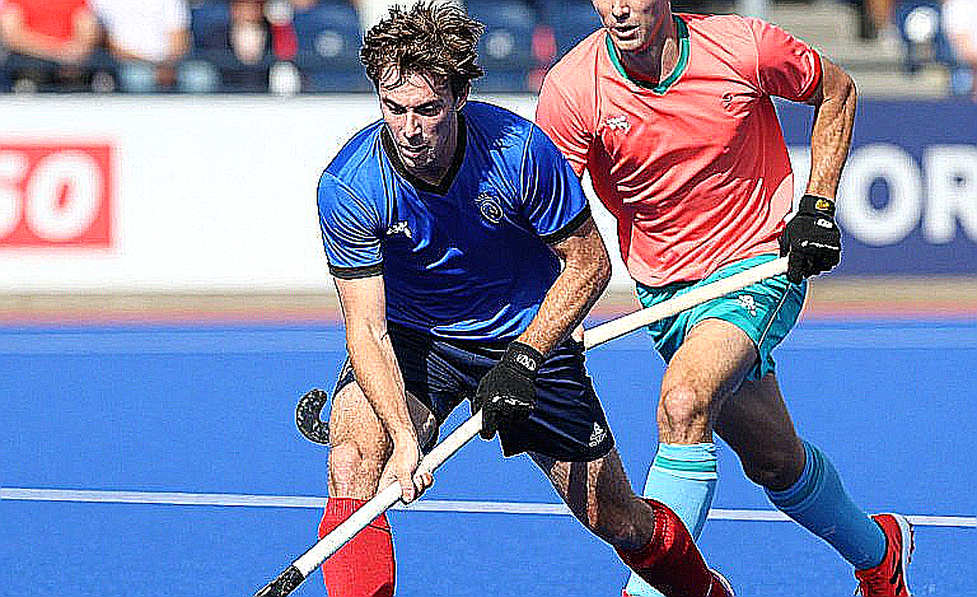
Keeping the tier label straight is the least exciting and most necessary part of this report. This is not the Asia Cup, not the Junior Asia Cup, not the Hockey5s Asia Cup — it is a group-stage women's hockey match at the Asian Games. Bangladesh's senior men have no senior World Cup or Olympic appearance; for the women, this is the first senior Asian-level participation at all. The line matters because this country has a long habit of collapsing trophy and tier into one word, and that habit manufactures the disappointment that follows.

The format is visible in the source itself: four quarters — lead in the first, concession in the second, collapse in the third. The Asian Games champion earns direct Olympic qualification, but that berth belongs to India, Korea, Japan and China. The value of this 3-3 is not qualification. It is institutionalisation.
To book that institutionalisation you have to open the federation's ledger. The men's domestic league ran 13 times in 27 years and shut completely from 2026 to 2026. Federation elections, an Air Force presidency, one working venue — that map is not a metaphor, it was the operating system. A system that could not hold its own men's calendar now has one women's point deposited against it, and it reads as administrative weakness, not strength.
Core: what the tape gives up
My habit is to run the tape — from the 64-match lab, from a single match notebook, reaching the smallest defensible conclusion the evidence allows. Here the tape is only a goal timeline: no possession, no shots, no circle entries. With that limit stated: penalty corner for Bangladesh in the second minute; Kazakhstan level from open play in the sixth minute of the second quarter; 1-3 in the 37th minute; Bangladesh's second goal around the 40th; the equaliser in the final quarter.
The opening corner is the one strong tactical signal. Converting a set piece against a peer opponent inside two minutes suggests the penalty corner is at least a functional weapon at this level. One corner is not a pattern; a pattern needs corners won, corners taken, and positions used. That data is absent, so we stop there.
All three Kazakhstan goals came from open play and essentially from one player — the hat-trick scorer, whose name appears in the report in two different spellings, itself a data-integrity warning. Bangladesh's three goals came from three players: Airin Ria, Kona Akter, Arpita Pal. Kona Akter's goal arrived a few minutes after the 37th-minute concession; Arpita Pal's equaliser came in the last quarter.
There is a structural difference buried in that distribution, though one match cannot settle it. Kazakhstan's attack funnels through one pair of feet, readable two ways: either that player is exceptional, or Bangladesh's marking never closed that channel. Without footage the two cannot be separated. Bangladesh's scoring was spread across three players — not proof of quality, but at least the single-point-dependency charge did not stick on this day.
The third quarter is what nags. Conceding the equaliser in the second quarter and then two goals in the third is the familiar signature of an inexperienced side: the twenty-minute quarter break costs it structure, and only fourteen minutes remain to recover. Yet that is exactly the stretch Bangladesh won. The 1-3 to 3-3 swing could be evidence of a court-side reset, or of the opponent's fitness drop. Choosing between them needs the full match, not the goal timeline.
Broadcasting is a separate ledger. The Asia Cup came home on a new feed, but whose feed is the question. In the 1980s hockey reached homes through BTV and newsprint; in the satellite era the men's game vanished from television; then came T Sports and the 2026 HCT franchise experiment. The November 2026 Pakistan playoff drew mainstream attention too. None of it is a turnaround — one televised hockey event is presence, not revival. This women's match generates not a single line about broadcast or sponsorship in the report.
Contrarian: this is a point, not a rising line
Here the conventional vocabulary has to be challenged. 'Incredible fightback', 'history', 'a sign' — those words are a size too large. A 3-3 says the two teams are close at this level; it does not say either defence is sound. Conceding three means gaps at the back, and coming back from two down means the opponent left gaps too. A 3-3 between two porous defences and a 3-3 between two equal sides are different readings, and choosing between them needs data that does not yet exist.
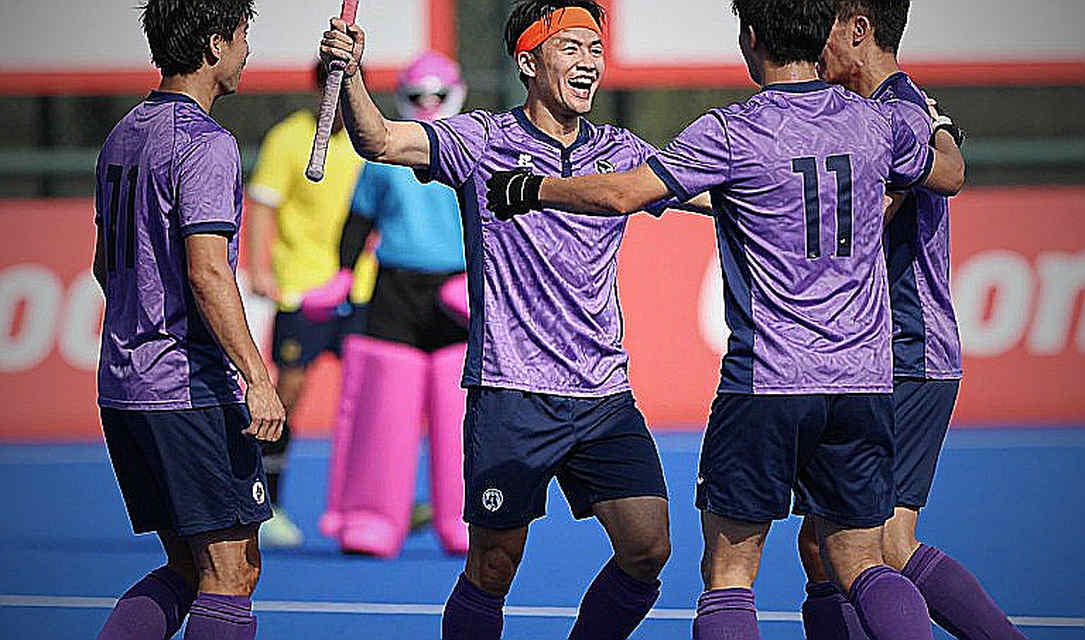
Second, the analytical value of a first point is binary — it happened or it did not. Three matches is far too small a sequence for a trend line: loss, loss, draw. Without knowing the opponents in those two defeats, no trend can be claimed. They were probably stronger than Kazakhstan, in which case the draw reflects an easier fixture rather than a sudden jump.
Third, an empty stadium still has a full archive. Pitch, broadcast and federation are three different books. When a national milestone produces zero downstream commercial noise, the problem is not the team. It is the system. For the boys, the Junior AHF Cup titles of 2026, 2026 and 2026 and the junior World Cup ticket proved a talent pool exists; the question was always whether those players stay in the game past 21. For the girls the question is harder, because there is no borrowed structure to lean on — one has to be built from the first day.
Takeaway
The remaining women's fixtures are the first real data point. More points against stronger or weaker opponents will harden or break the 'genuine parity' reading. So will Kazakhstan's next scoring distribution; the single-point-dependency estimate gets tested there. And unless the venue name, date and inconsistent spellings are checked against official records, this report will not survive in our own archive. The archive is where the crowd keeps standing — put a wrong date in it and the crowd drifts away too.
Even with the first point on the board the question is unchanged: you can build a programme from one point, but how many of these girls get the shirt again when the tournament cycle turns? Where the road from under-21 to senior is not wide, how long does a 23-year-old team last? The federation owes that answer. Not the match report.